

Updated July 26, 2026 – the complete 2026 buyer’s comparison
Lectric vs Ride1Up
Lectric vs Ride1Up: which e-bike brand earns your garage space?
Lectric and Ride1Up occupy the same direct-to-consumer neighborhood, but they furnish their houses differently. Lectric favors practical, adaptable machines with stout racks and broad fit ranges. Ride1Up spends more time on chassis feel, component choices and bikes that resemble the category they claim to inhabit. One brand often asks, “What can this carry?” The other asks, “How should this corner?” Both are excellent questions once you stop asking only how many watts fit in a headline.
RideStreetLegal may earn from qualifying purchases through partner links, at no additional cost to you. Prices and availability can change. The recommendations below weigh ride feel, useful hardware, buyer fit and the ownership fine print.
The brand-level verdict
Lectric sells solutions. Ride1Up sells more distinct riding personalities.
Lectric is the easier brand to recommend when the shopping list begins with a practical constraint: it must fold, carry a passenger, fit a shorter rider, support a huge rear load or provide three wheels. Its lineup is tightly organized around utility. The XP4, XPedition2 and XP Trike2 are not delicate objects pretending groceries are beneath them.
Ride1Up becomes more compelling when ride quality leads the brief. The 39-pound Roadster V3 is a very different animal from the Brose-powered Prodigy V2, the trail-focused TrailRush and the 90-pound Revv1 EVO. That variety creates sharper choices for enthusiasts, but it also means “buy a Ride1Up” is not enough advice. You still have to choose the correct species.
Choose Lectric
You need utility per dollar
Folding frames, integrated racks, broad rider fit, cargo packages and family-oriented accessories are central to the lineup rather than afterthoughts attached with optimism.
Choose Ride1Up
You care how the bike talks back
Torque sensing, lighter frames, mid-drive options, better trail component packages and category-specific geometry give enthusiasts more ways to choose a particular ride feel.
Our practical winner: Lectric is the better first stop for utility buyers. Ride1Up is the better first stop for riders who can describe the handling they want. That is not a tie. It is the useful answer to two different questions.
The 2026 garage
Seven Lectrics, six core Ride1Ups and no reason to compare the wrong bikes.
Lectric’s garage is arranged by chores. XP4 folds, XPedition2 hauls, XP Trike2 adds a third contact patch, XPress2 handles the commute, XPeak2 heads for loose surfaces and XP Lite2 keeps weight and price down. The former Lectric ONE has left the stage, which is useful information for anyone still finding old comparison charts in search results.
Ride1Up organizes its range more like a group ride in which everyone brought a different bike. Portola folds, Vorsa does nearly everything, Roadster V3 stays lean, Prodigy V2 devours road climbs, TrailRush brings proper eMTB hardware and the Revv1 family arrives dressed as though the bicycle rack is merely a social suggestion. Here is the field before we send the right models into the ring.
| Model | July 2026 price | Core hardware | Best rider | Availability |
|---|---|---|---|---|
| Lectric XP4 750 | $1,299 | 750W / 1,310W peak, 85Nm, torque sensor, 840Wh | Folder buyer who wants range, rack strength and a smoother pedal response | In stock; some colors were running low |
| Ride1Up Portola | From $895 | 750W, 65Nm, cadence sensor, 500Wh or 643Wh | Budget folder buyer who has measured the trunk and their lifting ability | In stock; clearance sale is final |
| Lectric XPedition2 | From $1,399 | Longtail, 450-lb capacity, torque sensor, single or dual battery | Family, delivery and serious cargo rider | Single- and dual-battery builds |
| Ride1Up Vorsa | From $1,395 | 750W, 95Nm, torque plus cadence modes, up to 440-lb rating | One-bike household wanting commute, cargo and light-trail flexibility | In stock; build and rack equipment vary |
| Lectric XPress2 | $1,399 | 750W, torque/cadence choice, hydraulic brakes, suspension fork | Comfort-first commuter who still wants throttle and punch | Cruiser and Commuter variants |
| Ride1Up Roadster V3 | From $1,395 | 39 lb, 500W, 50Nm, torque sensor, chain or belt | Apartment commuter who wants an e-bike to feel like a bicycle | In stock; variant pricing differs |
| Lectric XPeak2 | From $1,399 | Fat tires, 1,310W peak, 85Nm, up to 60 miles | Rough-road and casual off-road explorer | Standard and long-range versions |
| Ride1Up TrailRush | $1,995 | Brose mid-drive, 90Nm, 120mm air fork, dropper, four-piston brakes | Trail rider who wants genuine eMTB component priorities | In stock |
| Lectric XP Trike2 | From $1,499 | 14 mph, 415-lb capacity, differential axle, 13.5-inch standover | Rider prioritizing low-speed stability and easy access | 500W and 750W versions |
| Ride1Up Prodigy V2 | From $1,795 | Brose mid-drive, 90Nm, 9-speed or belt/CVT | Hill-heavy commuter or touring rider who values natural assistance | In stock; clearance sale is final |
| Ride1Up Revv1 EVO | $2,395 | 52V 20Ah semi-solid-state battery, 100Nm, full suspension | Moped-style rider who understands class modes and 90-pound bikes | Pre-order; early-September estimate |
Price language matters: “From” buys the least expensive configuration, not every battery, frame or drivetrain shown in the glamour shots. A free basket is pleasant; the correct battery and frame are permanent.
Interactive bike finder
Start with the ride that happens after the unboxing video.
Choose the job, the storage reality and the motor feel you prefer. The tool points to a starting model, then explains the compromise that comes with it.
The honest matchups
Four comparisons that survive contact with real riding.
Not every model needs a mirror-image rival. A longtail cargo bike and a lightweight city bike can share a price without sharing a purpose. These are the matchups where the decision is genuinely useful.
Folding utility
Lectric XP4 750 vs Ride1Up Portola
The folding-bike argument is often conducted by people who have not tried lifting one through a hatchback opening. The Portola weighs 59 pounds and folds to 19 by 29.5 by 33 inches. The XP4 750 weighs 71 pounds with its battery and folds to 37 by 17 by 29 inches. Both become easier after battery removal; neither becomes a briefcase.
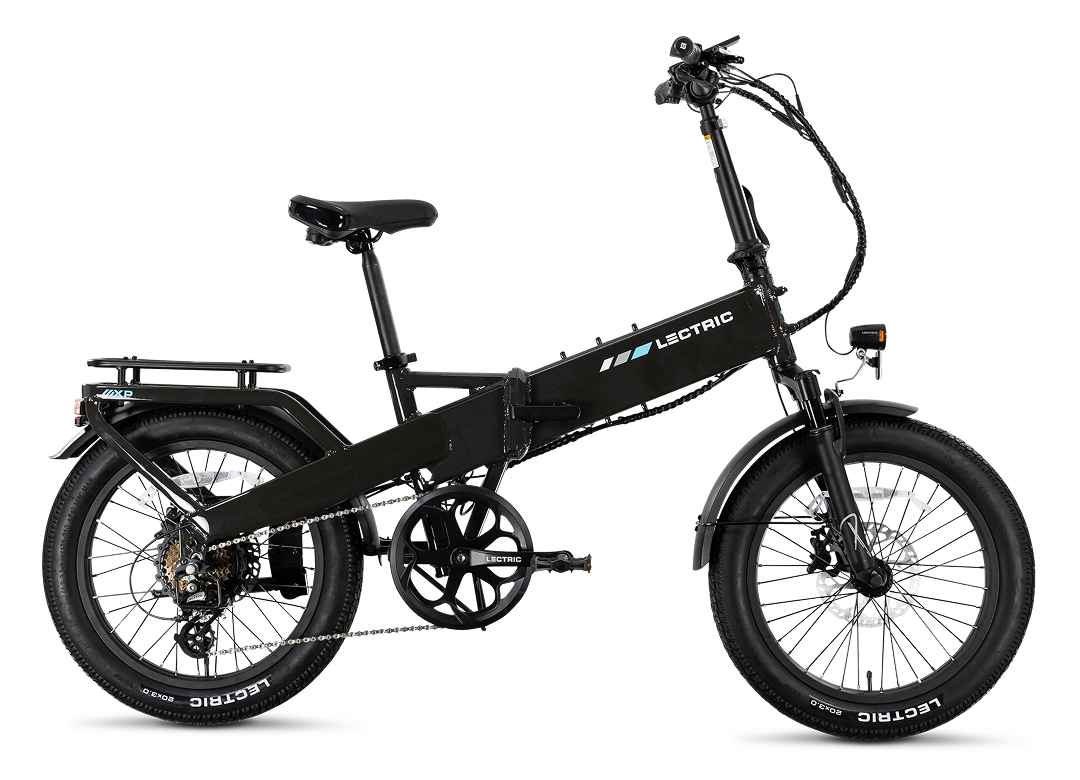
Lectric XP4 750
The torque sensor rewards actual pedal pressure instead of simply detecting crank rotation. That produces smoother launches in traffic and more intuitive control at low speed, especially when cargo has made the rear of the bike feel important.

Ride1Up Portola
The cadence system is less nuanced, but the 750W hub motor, hydraulic brakes, 80mm fork and 20-by-3-inch tires make this far more than a last-mile novelty. Its best feature may be the $404 it leaves in your budget versus the XP4 750.


Cargo and utility
Lectric XPedition2 vs Ride1Up Vorsa
This is not longtail versus longtail. It is dedicated hauler versus adaptable SUV bike. The XPedition2 carries its length behind the rider and is built around passenger rails, footboards, baskets and a 450-pound total ceiling. The Vorsa keeps a conventional wheelbase and can take a 150-pound removable rear rack on the standard and fat-tire builds, while retaining normal-bike agility.
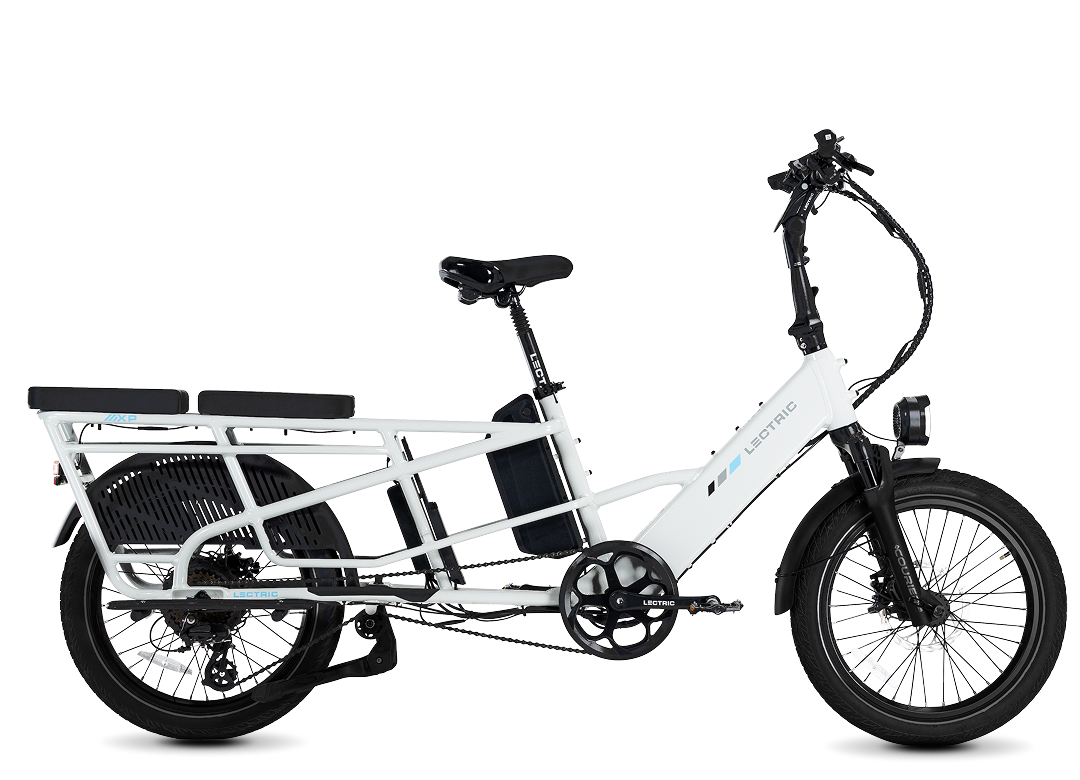
Lectric XPedition2
Longtails ride best when dense cargo stays low and passengers have the proper rails, seat and foot support. The frame capacity is impressive, but every accessory and human still counts toward the total. Physics does not accept promotional bundles as payment.

Ride1Up Vorsa
The clever feature is the ability to choose torque or cadence response. Torque mode makes technical or low-speed riding feel measured; cadence mode makes tired legs feel as though management has approved additional staffing. Pay attention to the suffix, because Lite, standard and FT equipment differs.

Daily commuting
Lectric XPress2 vs Ride1Up Roadster V3
The XPress2 arrives dressed for broken pavement: suspension fork, hydraulic brakes, 750W hub motor, throttle, full-size wheels and as much as 60 miles between charges in ideal conditions. The Roadster V3 is the leaner counterargument. At roughly 39 pounds, it can be carried upstairs without first drafting a workplace-injury report.
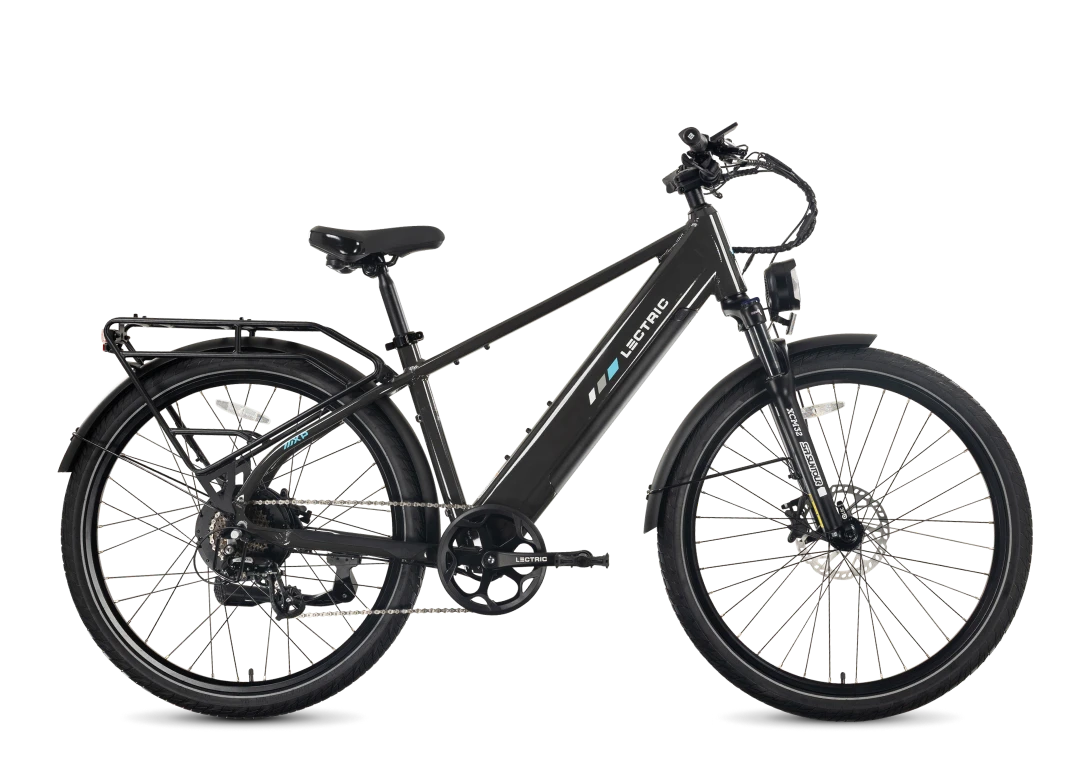
Lectric XPress2
The Commuter has the more active position; the Cruiser sits the rider more upright. Both let the rider switch between torque and cadence sensing, which is unusually useful when one person wants natural response and another wants the pedals to function mostly as a suggestion.

Ride1Up Roadster V3
Chain versions can reach 28 mph in Class 3 trim; belt options trade some speed for clean, low-maintenance operation. The narrow silhouette attracts less e-bike theater at the rack, though a removable battery still deserves the same security plan as any expensive component.


Dirt and trail
Lectric XPeak2 vs Ride1Up TrailRush
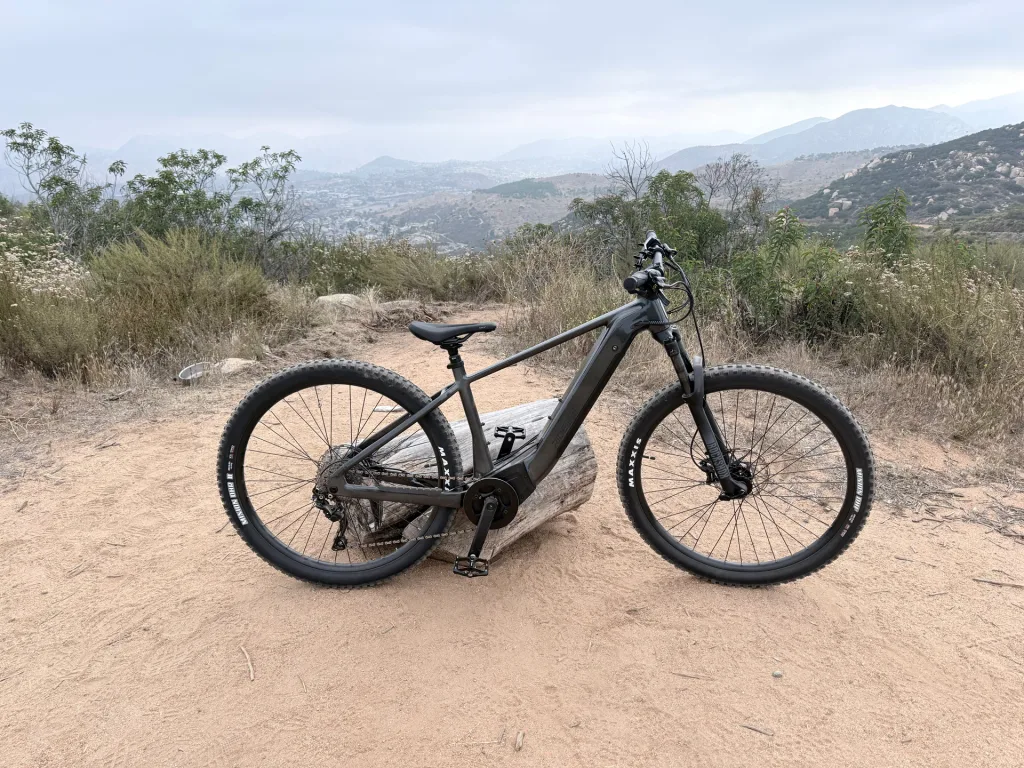
These bikes both appear near dirt, but they speak different dialects. The XPeak2 is a powerful fat-tire hub-drive explorer: stable on loose surfaces, comfortable on rough roads and happy to bring a rack. The TrailRush is an actual eMTB package with a Brose mid-drive, 29-inch Maxxis Minions, 120mm RockShox air fork, dropper post and four-piston brakes.

Lectric XPeak2
A hub motor puts more mass in the rear wheel and does not multiply motor torque through the bike’s gears. That matters on steep technical climbs. On mellow dirt, sand and broken pavement, the big tires and strong motor make the XPeak2 the easier, cheaper adventure tool.

Ride1Up TrailRush
The mid-drive keeps wheel mass lower and uses the drivetrain’s gears to climb. The 150mm dropper creates room to move on descents; the quad-piston brakes are there because eventually the fun portion of the hill becomes the stopping portion.

The bikes without true rivals
Some categories do not need a forced comparison.
A similar price does not create a rivalry. These three bikes solve jobs the other brand simply does not address, so forcing them into a head-to-head would be like comparing a wheelbarrow with a bar stool because both have legs.

Lectric-only answer
XP Trike2: stability, access and a different cornering lesson
Ride1Up does not sell a trike. The XP Trike2 offers a 13.5-inch standover, differential axle and a beginner preset that limits lower modes to 5 mph. Three wheels add low-speed stability, but they do not lean into turns. Enter corners slowly, keep both hands calm and resist the two-wheel instinct to carve. Trikes reward smooth steering and punish sudden ambition.
Ride1Up-only answer
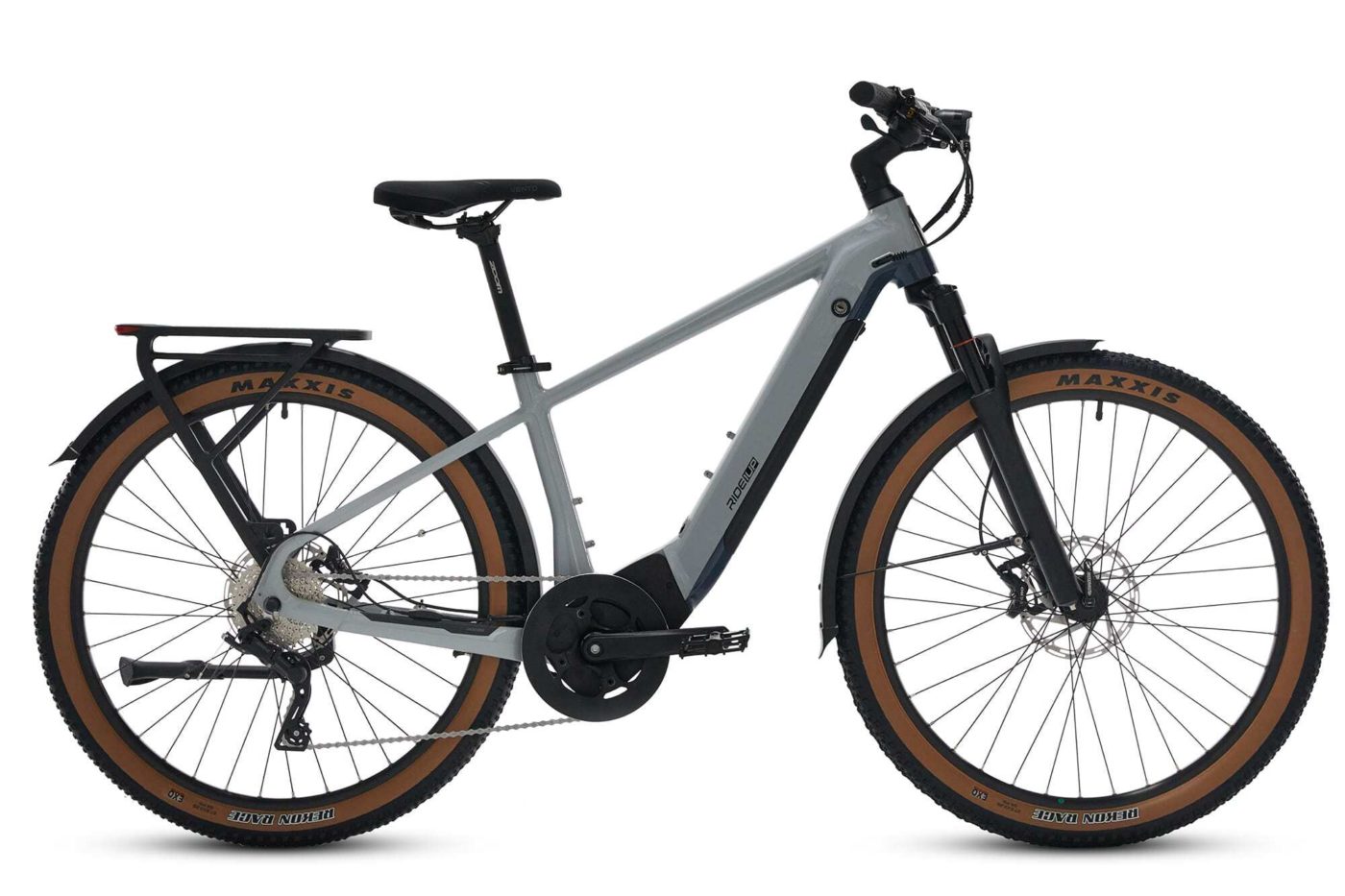
Prodigy V2: the quiet climber for roads and touring
Lectric has no mid-drive commuter to answer this one. The Prodigy V2’s Brose motor measures rider torque and sends power through the drivetrain, which feels natural and makes better use of low gears on long grades. The chain build is familiar and efficient; the belt-and-Enviolo version trades some mechanical directness for clean, stepless operation. Both are final sale during the clearance.
New pre-order
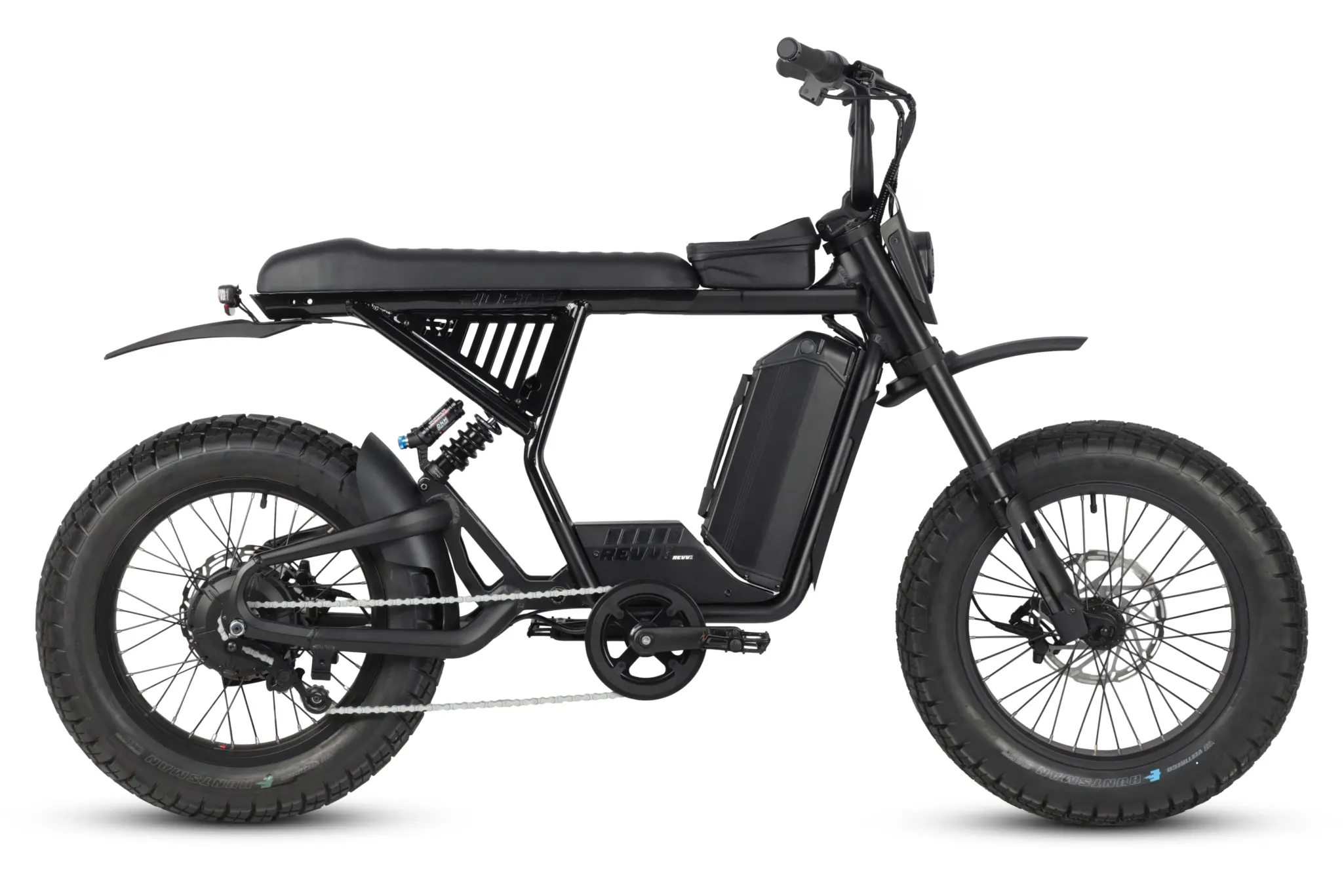
Revv1 EVO: the moped-style outlier with a new battery story
The EVO uses a 52V 20Ah semi-solid-state battery, a 750W Bafang hub motor, 160mm double-crown fork, 90mm rear travel and four-piston brakes. It arrives programmed as Class 2, opens a Class 3 pedal-assist mode and keeps its unlocked setting for private property. Pre-orders carry an early-September shipping estimate. Treat that date as an estimate, not a dinner reservation.
Lightweight footnote: The XP Lite2 starts around $799 and weighs 49 pounds, or 41 pounds without its battery. It is the lighter Lectric answer for short trips and tight storage. The Roadster V3 remains lighter overall and more full-size in feel; the XP Lite2 folds and costs much less.
What enthusiasts actually feel
Watts get the headline. Sensors, gearing and mass write the ride.
Push harder and assistance rises. It is easier to meter traction, launch smoothly and ride beside someone without repeatedly surging ahead like an overeager parade marshal.
Turn the cranks and the system supplies a programmed level of power. It can feel less natural, but it is excellent when tired legs want transportation more than a training session.
Prodigy V2 and TrailRush can use low drivetrain gears to keep the motor spinning efficiently on steep grades. Shift before the hill turns ugly and ease pedal pressure during the change.
Most Lectric models and Ride1Up’s Portola, Vorsa, Roadster and Revv1 drive the wheel directly. They are mechanically straightforward and can use throttle without loading the chain.
Twenty-inch folders accelerate and turn eagerly, but road texture reaches them sooner. Wider tires and suspension help; tire pressure is a tuning tool, not a number to maximize blindly.
A 90-pound moped bike may feel planted at speed and immovable on stairs. A 39-pound Roadster can be carried, lifted onto a rack and rescued from a dead battery with less theater.
Range reality: every maximum range figure assumes favorable conditions. Speed, throttle use, cold, headwinds, hills, low tire pressure and rider-plus-cargo weight all send a bill to the battery.
Real rider use cases
The winner changes when the driveway ends.
Delivery work
XPedition2 for the dedicated rig; Vorsa for mixed duty
A longtail gives an insulated carrier, panniers and support gear room to coexist. The Vorsa is easier to park and still accepts serious rack hardware. For either, keep dense items low, separate food from tools and confirm the rack rating of the exact build.
Apartment commute
Roadster V3 first, XP Lite2 second
Stairs turn bike weight into a daily subscription. The Roadster is lighter and rides like a conventional commuter. XP Lite2 folds and costs less. A 70-pound folder is compact storage, not necessarily easy lifting.
Steep hills
Prodigy V2 or TrailRush
A mid-drive in the correct gear is the enthusiast’s answer. Vorsa’s 95Nm hub motor is strong for road hills, but a long, technical climb exposes the difference between wheel torque and drivetrain leverage.
Family errands
XPedition2
The frame, passenger ecosystem and long rear deck are built for this job. Use approved seats, rails and foot support, then practice starts, braking and parking before adding precious cargo.
RV and road trips
Portola or XP4
Portola wins the lift. XP4 wins battery and rack capacity. Measure the actual compartment opening, not the cargo area described in the brochure, and check the carrier’s total and per-bike weight limits.
Returning rider
XP Trike2 or XPress2 Cruiser
The trike adds low-speed stability but requires a new cornering habit. The XPress2 Cruiser keeps two-wheel handling with an upright position and configurable assist. A local test ride is worth more than twenty geometry charts.
Actual singletrack
TrailRush
The dropper, air fork, mid-drive, four-piston brakes and Maxxis trail tires make the intent clear. XPeak2 is excellent for rough exploration; TrailRush is the bike here that arrives speaking trail.
Warranty, returns and service
The least exciting section may save the most money.
Both brands advertise one-year warranty coverage, but warranty and return rights are different tools. A warranty addresses covered defects. A return policy addresses whether the bike can go back because it does not fit, feels wrong or has become an enormous object in a small hallway.
| Question | Lectric | Ride1Up | Buyer move |
|---|---|---|---|
| Warranty headline | One year on listed covered parts; wear items and accessories excluded | One-year defects warranty; terms and exclusions apply | Read component coverage, labor expectations and claim steps before ordering |
| Normal bike return | After shipping, sales are final unless Lectric approves an exception under its strict conditions | Normally 30 days, under 20 miles, clean and complete; return costs and deductions apply | Do not treat either bike like a free weekend rental |
| Important exclusions | No return after 14 days in possession or after an e-bike has been ridden; approved returns can face up to $300 restocking plus shipping | Portola and Prodigy V2 clearance sales are final; Revv1 has separate 14-day terms | Confirm the policy attached to the exact model and sale before payment |
| Original box | Required if Lectric authorizes a return | Needed for Ride1Up to consider providing a prepaid label; otherwise buyer arranges freight | Keep every insert until fit, condition and configuration are settled |
| Assembly | Many models emphasize quick assembly; Lectric also recommends a qualified inspection after receipt | Most arrive largely assembled, but final setup and checks remain the owner’s job | Check axle security, stem, bars, pedals, brakes, derailleur and tire pressure before speed testing |
Checkout warning: A discounted Portola or Prodigy V2 is a commitment, not a 30-day audition. Lectric is stricter still once the shipping notice lands: any exception requires approval, an unridden bike, the original packaging and potentially return freight plus a restocking charge. Confirm the exact frame, battery and color before the warehouse turns your cart into a very large box.
Ask whether it services the exact brand, motor system and tire size. “We work on e-bikes” can acquire footnotes when the bike arrives.
Save the variant, price, included accessories, warranty and shipping estimate with the receipt. Sale bundles change faster than memories improve.
Photograph the carton and bike, document shipping damage, then complete the mechanical check before adding miles that can affect return eligibility.
Battery, controller, display, wheel and charger availability determines whether a value bike remains valuable after the warranty ends.
Street-use reality
Class settings matter more than what the bike could do in a parking lot.
Many models here can be configured across Class 1, 2 or 3 behavior, but access depends on the delivered configuration and local law. A Class 3 setting may be allowed on a road and prohibited on a multi-use path. Throttle rules, age limits, helmet requirements and local trail policies vary.
The Revv1 family deserves extra care because moped styling, high weight and unlockable off-road modes attract the attention of both enthusiasts and enforcement. The EVO arrives as Class 2, supports Class 3 pedal assist and keeps its unlocked mode for private property. Use the legal mode for the place, not the mode that made the internet thumbnail.
Real-world video
Watch the rider, the steering and the parking maneuver.
Acceleration clips are entertaining. The useful footage shows fit, low-speed balance, suspension movement, cargo behavior, noise and the moment someone has to lift the bike.
XP4 750
America’s best-selling folder, updated
Watch motor response, fold size and how the 750W version carries its weight.
Portola
When weight matters
Useful context for handling, compact storage and the real meaning of a 59-pound folder.
XPedition2
Longtail size and cargo context
Look beyond speed to deck length, passenger setup and slow-speed control.
Vorsa
The all-around utility case
Useful for comparing the normal wheelbase with a dedicated longtail cargo bike.
Roadster V3
The lightweight city contrast
Pay attention to frame feel, urban speed and how little visual bulk the drive system adds.
TrailRush
See the eMTB hardware working
Watch body position, suspension travel and why a dropper matters when the trail points down.
Final recommendation
Buy the category winner, not the brand winner.
For most practical first-time e-bike buyers: start with Lectric. The XP4 and XPedition2 solve obvious transportation problems, the XP Trike2 serves a category Ride1Up does not enter, and the accessory system makes it easier to build a complete setup without conducting bracket archaeology.
For experienced cyclists and ride-feel shoppers: start with Ride1Up. Roadster V3, Prodigy V2 and TrailRush make distinct choices about weight, motor placement, geometry and components. They are not merely the same frame wearing different tires.
My shortest shortlist: Portola for the cheapest capable folder; XP4 750 for the better-equipped folding utility bike; XPedition2 for family cargo; Roadster V3 for apartments; Prodigy V2 for road hills; TrailRush for genuine trail use; XP Trike2 for three-wheel stability; Revv1 EVO only for buyers who specifically want moped-style weight, posture and class complexity.
FAQ
Lectric vs Ride1Up questions.
Is Lectric or Ride1Up the better e-bike brand?
Lectric is generally stronger for folding utility, cargo hauling, trikes, broad rider fit and accessory-driven setups. Ride1Up is generally stronger for lightweight commuting, mid-drive climbing, trail hardware and distinct ride personalities. The better brand depends on the category you actually need.
Which is better, the Lectric XP4 or Ride1Up Portola?
The Portola is the lower-price and lower-weight choice, starting at $895 during the clearance sale and weighing 59 pounds. The XP4 750 costs $1,299 but adds a torque sensor, an 840Wh battery, up to 85 miles of advertised range and a 150-pound integrated rear rack. Portola clearance purchases are final sale.
Is the XPedition2 better than the Ride1Up Vorsa?
The XPedition2 is better for dedicated family and cargo use because it is a longtail with a large passenger-and-cargo ecosystem and a 450-pound total capacity claim. The Vorsa is better when you want a normal wheelbase, strong utility rack options and one bike for commuting, errands and lighter trail use.
Which brand makes the better commuter e-bike?
Ride1Up’s Roadster V3 is the better lightweight apartment commuter, while the Lectric XPress2 is the better comfort-and-power commuter for rough roads. Ride1Up’s Prodigy V2 is the stronger hill-focused touring commuter because of its Brose mid-drive.
Which brand is better for hills?
Ride1Up has the stronger specialist options. The Prodigy V2 and TrailRush use 90Nm Brose mid-drive motors that can leverage the bike’s gears on steep climbs. Lectric’s hub-drive models provide strong assistance, but the motor does not use the drivetrain’s low gears in the same way.
Does Ride1Up make a trike?
No. Ride1Up has no trike in its 2026 range. Lectric’s XP Trike2 is the direct option here, with a low standover, foldable frame, differential axle and 500W or 750W configurations.
Does Lectric make a mid-drive e-bike?
No current Lectric uses a mid-drive. Ride1Up offers two Brose-powered choices: the Prodigy V2 touring bike and the TrailRush eMTB.
Are Lectric and Ride1Up e-bikes street legal?
Many models can operate in common Class 1, 2 or 3 configurations, but local access depends on speed settings, throttle behavior, labels and the rules for the road, path or trail. The Revv1 EVO arrives as Class 2, with Class 3 pedal assist and a private-property off-road mode.
Which brand has the better return policy?
Neither should be treated as offering a casual trial. Ride1Up normally allows qualifying bike returns within 30 days and under 20 miles, but Portola and Prodigy V2 clearance purchases are final sale, and Revv1 has separate terms. Lectric treats sales as final after shipment and imposes strict conditions on any exception it approves.
Should I keep the e-bike shipping box?
Yes. Both brands make original packaging important to any return, and Ride1Up cannot provide a prepaid return label without the original box. Keep the carton and inserts until the bike’s fit, condition and configuration are fully settled.
Reference desk
Specifications, warranties and policies behind the comparison.
- Lectric 2026 model range
- Lectric XP4 750 specifications
- Lectric XPedition2 configurations
- Lectric XPress2 configurations
- Lectric XPeak2 configurations
- Lectric XP Trike2 specifications
- Ride1Up 2026 model range
- Ride1Up Portola specifications
- Ride1Up Vorsa specifications
- Ride1Up Roadster V3 specifications
- Ride1Up Prodigy V2 specifications
- Ride1Up TrailRush specifications
- Ride1Up Revv1 EVO specifications
- Lectric refund policy, revised June 4, 2026
- Lectric manufacturer’s limited warranty
- Ride1Up return and pre-order policy
- Ride1Up warranty information
Educational note: RideStreetLegal provides general buyer and rider education, not legal advice. Prices, specifications, bundles, stock, shipping dates, policies and laws can change. Verify the exact variant, delivered configuration and current local rules before buying or riding.