
Updated July 2026 · U.S. buyer and rider guide
E-bike class sticker requirements
Does your e-bike need a class sticker?
The useful question is not merely whether a sticker exists. It is whether the label, controller settings, throttle, pedals, motor rating and paperwork all tell the same story. When those details disagree, the label is usually the least persuasive witness in the room.
RideStreetLegal may earn from qualifying purchases through some links, at no additional cost to you. Recommendations favor clear specifications, support and street-use practicality—not whichever bike arrives with the most confident sticker.
Interactive class-label checker
Does the sticker match the bike?
This is a screening tool, not a court ruling. Use it to catch obvious contradictions before buying, modifying or riding an e-bike in public.
What a class sticker normally shows
Three facts—not a tiny motivational speech.
PeopleForBikes’ model law and many state statutes use the same basic label format: classification number, top assisted speed and motor wattage, permanently affixed in a prominent location. Several laws also specify readable type, commonly Arial at nine points or larger.
Educational example only. A legitimate label should come from the manufacturer, distributor or an accurate replacement process permitted by applicable law.
What the sticker does
It gives everyone a starting point.
A clear label helps buyers, shops, property managers, trail staff and enforcement understand how the manufacturer classifies the bike. It can also expose a bad listing before money changes hands.
What the sticker cannot do
It cannot negotiate with physics.
If the throttle keeps pulling past 20 mph, pedal assist continues past 28 mph, the motor exceeds the applicable limit or the pedals are decorative footrests, a printed “Class 2” rectangle does not repair the contradiction.
Major state examples
Where class-label requirements are written into law.
This is a practical snapshot of prominent state rules, not a substitute for checking the current statute where you live. Local rules can add restrictions, and recent changes—especially in New Jersey—can make a familiar class sticker much less useful than it was last year.
| State | General label rule | What the label shows | Modification issue | Practical takeaway |
|---|---|---|---|---|
| California | Manufacturers and distributors must permanently affix a prominent label. | Class number, top assisted speed and motor wattage; statute specifies readable formatting. | A speed-capability change can require a replacement label reflecting the new classification. | A missing or contradictory label is a serious buying red flag. |
| Colorado | State materials require classified e-bikes to carry identifying information; updated manufacturer/distributor labeling provisions took effect in 2026. | Class, speed and motor information. | Changes affecting speed or motor information must be reflected accurately. | Do not assume an old sticker remains accurate after controller changes. |
| Florida | Manufacturers and distributors must permanently affix a prominent label. | Classification number, top assisted speed and motor wattage. | State law restricts tampering or modification without appropriately replacing the label. | “Unlockable to 35 mph” conflicts with the clean three-class lane. |
| Texas | Manufacturers or sellers must apply a permanent prominent label. | Class, top assisted speed and motor wattage; statute specifies Arial and minimum type size. | Actual behavior must still satisfy the state definition. | A seller-created class claim should match the delivered configuration. |
| New York | State law uses permanent-label requirements for electric bicycles used or sold in the state. | Class, top assisted speed and motor wattage. | Modification beyond class or power limits can remove the bike from the labeled category. | NYC battery and commercial-use rules may add separate obligations. |
| Ohio | Manufacturers and distributors must permanently affix a prominent label. | Class, top assisted speed and motor wattage. | A modification changing top assisted speed requires the label to be changed. | The label is expected to follow the modified speed—not nostalgia. |
| Illinois | Manufacturers and distributors must use a permanent prominent label. | Class number, top assisted speed and motor wattage. | Knowingly changing speed capability or motor engagement requires accurate relabeling. | Class 3 bikes also need a speedometer. |
| Washington | New e-bikes offered for sale or distribution must carry a permanent label. | Class number, top assisted speed and motor wattage. | Speed changes that reclassify the bike require the label to be replaced. | Confirm the exact 2026 configuration and local trail access. |
| New Jersey | The state substantially changed e-bike treatment in January 2026. | A class sticker alone does not answer licensing, registration or insurance questions. | Class 2 and 3 treatment is now especially consequential. | Use the dedicated New Jersey guide before relying on an old label or old advice. |
Important: Federal consumer-product rules define a low-speed electric bicycle for manufacturing purposes, while state law generally controls vehicle classification and where you can ride. “CPSC compliant” and “legal on this bike path” are related questions—not identical twins.
Missing, damaged or suspicious labels
What should you do if the class sticker is gone?
New bike
Pause before accepting the mystery.
Ask the seller for a photo of the permanent label, the exact model manual, motor rating, throttle behavior and class settings. “The warehouse forgot it” is not useful documentation.
Used bike
Assume modifications are possible.
Check controller settings, display menus, throttle speed, motor markings, serial number and the original model page. A used bike can inherit somebody else’s enthusiastic firmware decisions.
Damaged label
Contact the manufacturer first.
Request a model-specific replacement or written confirmation. Preserve the serial number and purchase records. A generic internet sticker may look tidy while proving almost nothing.
Conflicting label
Believe the behavior.
If a Class 2 label sits on a bike with 30-mph throttle operation, treat the bike as outside the clean Class 2 lane until the configuration and legal classification are resolved.
Imported bike
Check the U.S. version.
A model sold internationally may arrive with 25 km/h, 20 mph, 28 mph or unrestricted settings depending on region. The same model name does not guarantee the same legal configuration.
Marketplace listing
Save the evidence.
Keep screenshots of the class claim, motor rating, speed settings, warranty and seller identity. Listings can change faster than your return window develops character.
Can you add your own sticker?
You can print a label. You cannot print a legal classification into existence.
A replacement label may be appropriate when a legitimate manufacturer label is damaged or when applicable law expressly requires accurate relabeling after a lawful modification. But the replacement must describe the bike that actually exists—not the bike you would prefer to explain during a traffic stop.
Ask for a replacement label, model specifications or written class documentation tied to the serial number.
Verify throttle cutoff, pedal-assist cutoff, motor rating and whether restricted modes can be changed while riding.
Save the invoice, manual, compliance documents and screenshots of the exact product version.
A knowingly false sticker can make an already weak legal argument look much worse.
Speed unlocks and switchable modes
The sticker is not frozen in time when the bike changes.
Many direct-to-consumer bikes offer configurable Class 1, 2 or 3 settings. That can be useful when the class changes through a deliberate setup process and the bike remains within applicable limits. The risk rises when an “off-road” mode allows throttle or assist beyond the legal class and can be activated as casually as changing the clock.
Lower risk
Documented class switching
The manufacturer clearly explains each mode, the motor cuts off at the advertised limit, the label and documentation match, and the rider uses the permitted configuration for the route.
Gray area
Hidden unlock menu
The bike is sold as Class 2 or 3 but includes a display code that raises throttle or assist speed beyond the labeled class. The sticker now describes only one personality.
High risk
E-moto with bicycle accessories
The device exceeds common e-bike power or speed limits, uses motorcycle-like components or lacks meaningful pedals. Adding a class decal is the transportation equivalent of putting a “service animal” vest on a rhinoceros.
Amazon, Walmart and marketplace warning signs
Read the listing like it is trying to win an argument.
Marketplace pages often combine peak wattage, nominal wattage, maximum speed, restricted speed and “off-road” speed in one cheerful paragraph. Your job is to separate the facts before the return period separates from you.
The class sticker should be on the delivered bike, not only drawn into a product-page graphic.
Peak marketing numbers do not necessarily tell you the continuous motor rating used by a statute.
A bike may stop throttle at 20 mph while allowing pedal assist to 28 mph—or may ignore both conventions entirely.
Model names are often reused across regions, batteries and controllers.
Missing labels, unclear documentation and incompatible local rules should not become expensive permanent hobbies.
UL 2849 or UL 2271 claims should be traceable to the exact model or system—not borrowed from a neighboring product.
Safer bikes to compare
Look for clear settings, support and documentation.
These are not “legal everywhere” promises. They are mainstream models with clearer manufacturer information and support paths than an anonymous listing. Confirm the delivered label, exact configuration and local rules before riding.
Light city commuter
Ride1Up Roadster V3
A bicycle-like commuter with documented class settings, a torque sensor and lower visual bulk. A strong comparison for riders who want speed without buying a rolling sofa.

Configurable utility folder
Lectric XP4
A mainstream folding option with published configurations, accessory support and a large owner base. Confirm the exact motor version, class setting and delivered label.
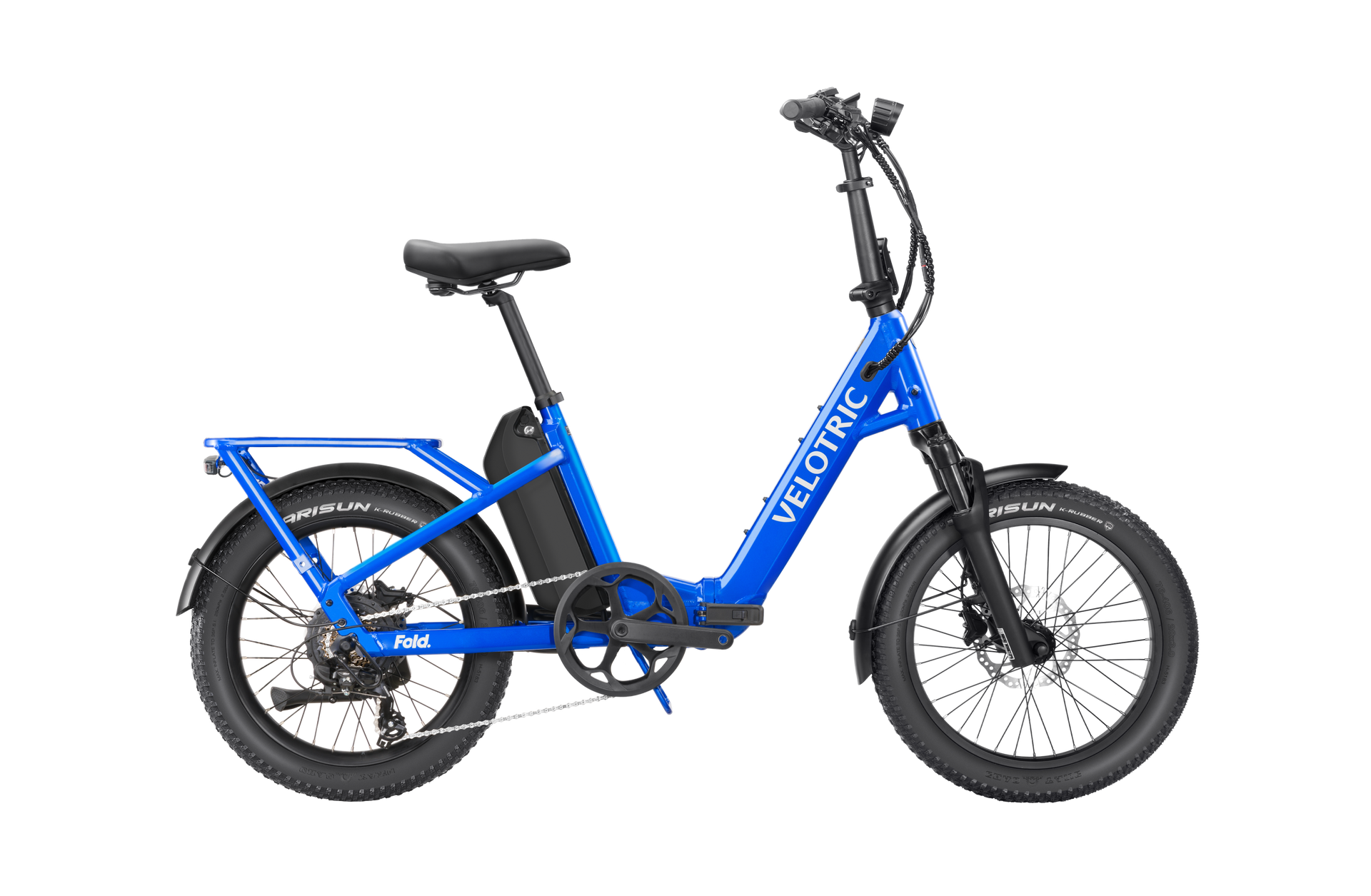
High-capacity folder
Velotric Fold 1 Plus
A higher-capacity folding comparison with manufacturer support and published performance settings. It folds for storage; gravity remains fully enabled.
Two-minute inspection
Photograph these before the first ride.
Capture the class, top assisted speed and motor wattage in a readable photo.
Record the frame and battery serial numbers before theft, damage or a warranty issue.
Save the stock speed, wheel-size and class configuration before changing anything.
Photograph the motor label and compare it with the product page and class sticker.
Confirm where throttle power stops under controlled, legal test conditions.
Confirm whether assistance stops at 20, 28 or another speed.
Before-you-buy checklist
Get the class-label and legality checklist.
Use it to compare the sticker, motor, throttle, assisted speed, battery claims, seller documentation and local rules before the return window starts doing cardio.
No spam. Unsubscribe anytime. Rules and product configurations can change.
FAQ
E-bike class-sticker questions.
Is an e-bike class sticker required?
It depends on state law. Many states using the Class 1, 2 and 3 system require manufacturers, distributors or sellers to permanently affix a label showing the class, top assisted speed and motor wattage. Check the current law in your state.
What must an e-bike class sticker show?
Common state requirements include the classification number, top assisted speed and motor wattage. Some statutes also specify that the label must be permanent, prominent and printed in a minimum type size.
Can I ride an e-bike with no class sticker?
A missing sticker may violate a labeling rule or create an enforcement and access problem, depending on the state. It also makes it harder to verify the bike’s class. Contact the manufacturer and confirm the actual configuration before public-road or path use.
Can I put a Class 2 sticker on my e-bike?
Only if the bike actually meets the applicable Class 2 definition and the replacement process is lawful and accurate. A Class 2 sticker does not legalize a throttle that continues above the permitted speed or a motor outside the applicable limits.
Does an e-bike sticker make the bike street legal?
No. The bike must also meet the applicable definition through its pedals, motor rating, throttle behavior, assisted speed and other required equipment. State, local and route-specific rules still apply.
What happens if I unlock my e-bike?
If the change raises motor-assisted speed or changes throttle behavior, the bike may move into another class or stop qualifying as an e-bike. Several states require an updated label after a change that affects classification, but relabeling cannot rescue a setup outside the legal definitions.
Does peak wattage belong on the class label?
State statutes commonly refer to motor wattage, while product listings often advertise peak output. Because laws and testing terminology vary, confirm the manufacturer’s rated motor specification rather than relying on the largest marketing number.
What if my used e-bike has the wrong sticker?
Treat it as a warning that the bike may have been modified. Check the motor, controller, display settings, throttle cutoff, pedal-assist cutoff, serial number and original model documentation before riding it as a classified e-bike.
Do Sur-Rons and Talarias need e-bike class stickers?
A class sticker does not turn an electric dirt bike or e-moto into an e-bike. Many Sur-Ron- and Talaria-style machines exceed common e-bike speed or power definitions and may be treated as mopeds, motorcycles, motor-driven cycles or off-highway vehicles.
Where is the class sticker usually located?
Common locations include the seat tube, down tube, chainstay or another visible frame area. The exact location varies, but laws commonly call for a permanent label in a prominent place.
Should I buy a replacement class sticker online?
Start with the manufacturer. A generic sticker may not match the model, serial number or actual configuration. Keep written documentation and do not use a replacement label to misrepresent the bike’s speed, power or class.
Official sources and primary references
Verify the rule that applies where you ride.
- Electronic Code of Federal Regulations — 16 CFR 1512.2 bicycle definition
- California Vehicle Code §312.5
- Colorado General Assembly — Electric Bicycles
- Florida Statutes §316.20655
- Texas Transportation Code Chapter 664
- Ohio Revised Code §4511.522
- Illinois Vehicle Code 625 ILCS 5/11-1517
- PeopleForBikes — State-by-state e-bike laws
- PeopleForBikes — Model Electric Bicycle Law
Educational note: RideStreetLegal provides general buyer and rider education, not legal advice. Laws, agency interpretations, product configurations and local access rules can change. Verify the current statute, local ordinance and land-manager rules before buying, modifying or riding.