Sur-Ron impound risk
Updated July 2026 · enforcement examples, tow risk and recovery steps
Can police take your Sur-Ron? 7 reasons it can be impounded.
Yes, police can tow or impound a Sur-Ron in some situations. The risk is not simply owning the bike—it is using a high-powered e-moto on public roads, bike lanes, sidewalks, campuses or parks without a legal vehicle category, required documents or route access.
Quick answer
When can police actually take a Sur-Ron?
The short version is simple: the more your Sur-Ron looks like an unregistered motorcycle or off-road vehicle being used in public, the higher the chance of a citation, tow, seizure, or impound. The bike itself is not the only issue. The location, rider behavior, paperwork, and local rules are what usually decide how serious the stop becomes.
Highest-risk situations
The seven biggest triggers
Why police may tow or impound a Sur-Ron.
No single factor guarantees an impound. Risk rises when several of these stack together—especially an unregistered e-moto, a public location and riding behavior that makes the stop impossible to ignore.
Unregistered public-road use
A stock Sur-Ron may be treated as an off-road motorcycle or another motor-vehicle category rather than a legal e-bike.
No required license or insurance
If the machine is treated as a motorcycle, moped or motor-driven cycle, missing operator and insurance requirements can become central.
Riding where e-motos are prohibited
Bike lanes, sidewalks, campuses, parks, boardwalks, beaches and shared paths are common places for complaints and location-based enforcement.
Wheelies, racing or traffic weaving
Behavior can turn a classification gray area into an obvious public-safety stop before anyone debates motor wattage.
A crash, injury or repeated complaint
Collisions, school-zone concerns and repeated neighborhood calls often bring closer scrutiny of both the rider and the vehicle.
Unclear ownership or altered identifiers
No bill of sale, missing serial information or a theft report can lead to the bike being held as property or evidence.
Ignoring an earlier warning
A second stop on the same route after a citation or warning gives officers less reason to treat the incident as a misunderstanding.
The combination matters most
No plate plus a bike lane plus wheelies is not a subtle legal question. It is practically a group project for enforcement.
Why acting quickly matters after a tow: release procedures can require proof of identity and ownership, registration or insurance where applicable, agency authorization and payment of towing, administrative and daily storage charges. Deadlines and fees are local, so contact the holding agency immediately.
The legal distinction
A legal e-bike and an e-motorcycle can face completely different enforcement.
Calling it an “e-bike” is not enough during a stop. Officers and agencies usually care about the actual category: pedals, motor output, assisted speed, throttle behavior, registration eligibility, plate, insurance, rider license, equipment, and where the machine is being used.
That is why a Sur-Ron, Talaria, EKX, Stark, or other e-moto can be treated differently from a conventional commuter e-bike. A safer starting point is to treat off-road e-motos as off-road machines or motor-vehicle questions unless a state or local authority clearly says otherwise.
Lower-risk lane
Compliant bicycle-style e-bike
Operable pedals, class-limited assistance, a clear class label, and route-appropriate use make the conversation much cleaner.
Higher-risk lane
E-motorcycle, moped, or off-road vehicle
If the machine fits a motor-vehicle category, officers may look for a plate, registration, insurance, license, helmet, and legal road equipment.
Gray-area warning
Pedals and speed settings do not settle the issue
Aftermarket pedals, a slow mode, or “street legal” seller wording may not change the design, paperwork, performance, or local access category.
Interactive risk check
How exposed is your current riding plan?
Use this as a quick gut check before riding. It highlights the facts that usually raise enforcement and impound risk, but local law still controls the final answer.
Official enforcement examples
Real agencies openly warn riders about e-moto impound and motor-vehicle classification.
Carlsbad, California
Police distinguish e-motorcycles from e-bikes
Carlsbad’s city guidance says e-motorcycles such as Sur-Ron, Talaria, 79-Bike, Rawrr Mantis, and Stark are not street-legal e-bikes, and it states that police can impound non-street-legal e-motorcycles.
Phoenix, Arizona
Motor-driven-cycle violations may lead to impound
Phoenix Police warns riders that traffic-law violations can result in enforcement and that vehicles may be subject to impound under applicable Arizona law.
California statewide alert
Too fast may mean moped or motorcycle
California’s Attorney General warned that two-wheeled vehicles exceeding California e-bike speed limits may be mopeds or motorcycles, not e-bikes.
Riverton, Utah
Illegal electric dirt-bike operation is a public-safety focus
Riverton’s public-safety messaging warns about illegal electric dirt-bike operation in local communities and the safety risks tied to that use.
Orange County, California
Vehicle classification changes handling
Orange County Sheriff’s guidance separates electric bicycles from motorcycles, motor-driven cycles, mopeds, and motorized bicycles for enforcement and handling purposes.
New York example
Registration categories matter before street use
New York DMV separates qualifying e-bikes from vehicles that require registration, and moped-style public-road use generally involves registration and license requirements.
Impound-risk scenarios
The same Sur-Ron can be low risk, gray area, or high risk depending on the situation.
Most riders ask this question like there is one national answer. There is not. A private-property ride, a legal OHV-area ride, a school-zone wheelie, and a city-street commute can all be treated differently.
| Situation | Likely risk level | Why it matters | Better move |
|---|---|---|---|
| Private property with permission | Lower | Public-road registration is less central when the machine stays where it is allowed. | Confirm owner permission, noise rules, guests, safety gear, and transport. |
| Approved off-road or OHV venue | Medium | Access may depend on registration, permits, age, helmet, spark/noise rules, and machine type. | Read the venue rules before arriving. |
| Public street with no plate or registration | High | The bike may be treated as an unregistered motorcycle, moped, motor-driven cycle, or off-road vehicle. | Verify the road-title path before riding. |
| Bike lane or shared path on a stock Sur-Ron | High | Bike infrastructure is generally for bicycles and qualifying e-bikes, not high-powered e-motos. | Use a clearly classed e-bike for daily routes. |
| Wheelies, speeding, racing, or traffic weaving | Very high | Rider behavior can trigger enforcement even before the classification debate is settled. | Do not test legal gray areas with obvious risk behavior. |
| Registered, plated, insured, and correctly licensed road setup | Lower, but verify | The paperwork is stronger, but the registration category, equipment, and local route still matter. | Keep documents current and confirm the registration covers the exact machine. |
What police may examine
The stop may focus on more than top speed.
Category
Pedals, throttle, motor, and assisted speed
Officers may compare the visible configuration with local e-bike, moped, motorcycle, or off-road-vehicle definitions.
Paperwork
Registration, plate, insurance, and license
Missing motor-vehicle documents become central if the machine is not accepted as a legal e-bike.
Identity
Serial number, VIN, bill of sale, or manufacturer paperwork
Keep proof of ownership separate from the bike in case the machine is held as property, evidence, or suspected stolen property.
Equipment
Lights, mirrors, tires, brakes, and modifications
Equipment can matter, but lights and mirrors do not fix missing classification, title, registration, insurance, or route authority.
Location
Street, bike lane, sidewalk, trail, park, school, or campus
The same bike can be treated very differently depending on where it is ridden.
Behavior
Speed, wheelies, traffic weaving, or complaints
Unsafe riding can turn a classification gray area into a much more serious enforcement encounter.
Check your state next
Impound risk changes fast by state and city.
Some places focus on e-moto enforcement more aggressively than others. Use your state page to check the e-bike definition, road registration path, license rules, trail restrictions, and local-access risks before riding.
Lower-risk alternatives
Three alternatives that are easier to explain than a stock Sur-Ron.
When the real goal is commuting or neighborhood riding, buying a machine that already fits a recognizable e-bike lane is usually smarter than trying to explain a dirt e-moto after the tow truck arrives.

Moped-style middle ground
Ride1Up Revv1
The Revv1 is the style bridge for riders who like the long-seat look but want pedals and published class modes instead of a full off-road e-moto.
- Still check the selected mode and local access rules.
- Better fit than a Sur-Ron for riders who want moto-inspired street presence.
- Heavy compared with a normal bike, but easier to categorize than a dirt e-moto.
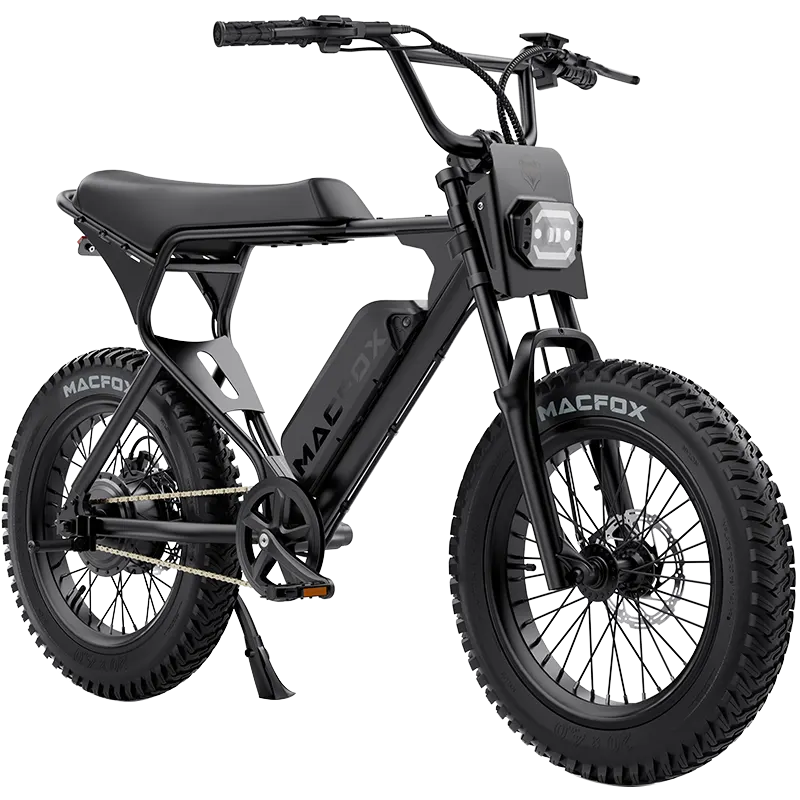
Budget moto-style look
Macfox X1S
The X1S is worth checking if you want a compact long-seat look without chasing Sur-Ron-level speed or output.
- Macfox lists a 20 mph factory top speed for the X1S.
- Better for casual street-style riding where permitted than full-time cargo work.
- Keep it in a compliant setup and verify local rules.

Low-profile city ride
Ride1Up Roadster V3
Roadster V3 is the opposite of an impound-bait e-moto: lighter, bicycle-like, and built for pavement.
- Best for work, school, and errands.
- Not a cargo or off-road bike.
- Lower-profile street presence.
Want the cleanest public-road option?
Start with a clearly classed commuter e-bike, then verify your local route before buying.
If the bike is already impounded
Release procedures are local, and storage fees can move fast.
The agency or tow company should identify the release process. Depending on the reason for the hold, you may need ID, proof of ownership, registration, insurance, a licensed operator, payment of towing/storage fees, or court/agency authorization.
1
Find the holding agency and location
Use the citation, property receipt, tow slip, incident number, or dispatch contact.
2
Ask what kind of hold applies
A traffic impound, evidence hold, stolen-property hold, safekeeping hold, or abandoned-vehicle tow can follow different procedures.
3
Request the exact release requirements
Ask for deadlines, required documents, fees, hearings, appeal procedures, and whether the bike must be transported away.
4
Control storage costs
Storage charges can add up. Act quickly, but do not sign inaccurate statements or waive rights you do not understand.
5
Challenge the classification through the proper process
Use the local administrative or court process rather than trying to relitigate the issue at the storage yard.
6
Do not resume the same riding plan
Resolve the category, registration, insurance, license, and route questions before returning to public-road use.
If police stop you
Do not turn a classification problem into a confrontation.
Stay calm
Do not physically resist or attempt to leave
Keep the interaction controlled. The roadside is not the best place to win a vehicle-classification dispute.
Ask clearly
Ask what category or violation is being cited
Try to determine whether the issue is speed, equipment, registration, licensing, prohibited location, reckless operation, or another violation.
Document
Keep every receipt, report, and agency detail
Record the incident number, tow company, storage location, officer or agency contact, and every deadline provided.
Ownership
Have purchase records ready
Keep a bill of sale, order confirmation, serial number, photos, and any title or manufacturer paperwork.
Preserve evidence
Do not change the bike after the incident
Do not change settings, remove parts, or alter the condition if classification, speed, crash facts, or allegations may be disputed.
Get local help
Consider a local attorney when the stakes are high
Legal advice may be worth it after an impound, injury crash, criminal allegation, license issue, insurance dispute, or high storage bill.
Watch before you risk it
Videos help show why these bikes are treated differently from normal commuters.
Sur-Ron context
Sur-Ron Light Bee overview
Useful for seeing why the Light Bee is closer to an off-road e-moto than a commuter e-bike.
Moped-style option
Ride1Up Revv1 review
Shows the middle ground for riders who want moto styling with pedals and class modes.
Commuter contrast
Roadster V3 review
A useful contrast if you want a lighter, bicycle-like commuter instead of an e-moto.
FAQ
Sur-Ron impound questions riders ask most.
Can police impound a Sur-Ron?
Yes, in some jurisdictions and circumstances. Risk is highest when the machine is treated as an unregistered motor vehicle, moped, motorcycle, or off-road vehicle, or when it is connected to reckless operation, prohibited-location use, a crash, evidence, or ownership concerns.
Can police impound a legal Class 1, Class 2, or Class 3 e-bike?
Not necessarily under the same motor-vehicle tow theory. A legal e-bike may still be held as property, evidence, safekeeping, or after theft or a collision, but that is different from towing an unregistered motorcycle.
Do pedals prevent a Sur-Ron-style bike from being impounded?
No. Pedals do not automatically override motor power, throttle behavior, assisted speed, design, paperwork, registration requirements, or local access rules.
Can lights and mirrors make it safe from impound?
No. Road equipment can be required, but it does not solve vehicle classification, title, VIN, registration, insurance, licensing, or route-access problems by itself.
What documents should I keep?
Keep a bill of sale, order confirmation, serial number, photos, manufacturer paperwork, registration, insurance, and any title or certificate documents that apply.
Should I contact a lawyer after impound?
Local legal advice may be appropriate when the bike is expensive, storage fees are rising, classification is disputed, or the incident involves a crash, injury, criminal allegation, license issue, or insurance claim.
Bottom line
Do not wait for the stop to decide what your bike legally is.
If you want a Sur-Ron for private land or a legal off-road venue, plan the transport and venue first. If you want daily public-road transportation, start with a clearly classed e-bike and verify the route before buying.
Official and product references
Official sources for classification, enforcement and release context.
- City of Carlsbad Police Department electric-bike and e-motorcycle guidance
- Riverton, Utah public-safety messaging on illegal electric dirt-bike operation
- Phoenix Police motor-driven-cycle enforcement and impound guidance
- Orange County Sheriff’s Department enforcement and handling bulletin
- California Department of Justice 2026 e-bike classification alert
- New York DMV electric bicycles and other unregistered vehicles
- EKX X21 Max product page
- Ride1Up Revv1 product page
- Macfox X1S product page