Texas Sur-Ron laws
Updated July 2026 · Texas statutes and agency guidance reviewed
Is a Sur-Ron street legal in Texas? Built for off-road use, not ordinary e-bike rules.
Texas cares about the category the machine actually fits—not whether a seller, rider, or social-media caption calls it an “e-bike.” A slower mode, pedal kit, mirrors, or turn signals may improve usability, but they do not automatically move an off-road e-moto into the electric-bicycle category.
The Texas definition
Why Texas classifies a stock Sur-Ron differently from an ordinary e-bike.
Texas builds its e-bike definition around three basic things: working pedals, a motor under 750 watts, and assisted speed that stays within the Class 1, 2, or 3 limits. A normal commuter e-bike is designed around those rules. A Sur-Ron is designed around off-road performance instead.
Sur-Ron riders usually choose the bike for its responsive torque, low weight, quiet drivetrain, upgrade potential, and dirt-bike handling. Those strengths are also why Texas does not treat it like a conventional commuter e-bike. Compare the actual specifications with the Class 1, Class 2, and Class 3 rules instead of relying on a broad product label.
Texas e-bike lane
Class 1, Class 2, or Class 3
This is the straightforward category: the bike has usable pedals, the motor stays below 750 watts, and the assistance cuts off where the class rules say it should.
Sur-Ron lane
Off-highway electric motorcycle
The Light Bee X is sold as an off-road dirt bike. Its motorcycle-style layout and performance make it a very different proposition from a labeled commuter e-bike.
Important distinction
Title does not automatically mean street registration
This is an easy point to misunderstand: an off-highway title proves ownership, but it is not the same thing as a street plate and registration. I would never assume “it has a title” means “I can ride it on the road.”
Why riders choose one
A Sur-Ron can be a great bike when it is used for the job it was built to do.
Low weight
More manageable than a full-size dirt bike
The Light Bee platform feels nimble and approachable while still delivering serious acceleration and off-road capability.
Quiet power
Strong torque without a gas engine
Immediate electric response and lower noise are a major part of the appeal for trail riding and private-property use.
Customization
A large enthusiast upgrade ecosystem
Suspension, brakes, wheels, batteries, controllers, protection, and appearance upgrades let owners build the bike around their riding style.
Pick the right Texas riding lane
Still want the Sur-Ron look or feel? Start with how and where you plan to ride.
Most people landing on this guide are not looking for a generic bicycle. They usually want one of three things: true off-road e-moto performance, a moped-style e-bike with a clearer class structure, or a street-focused bike that still has personality. These options serve different jobs, so none should be treated as an automatic legal substitute for another.
Performance and trails
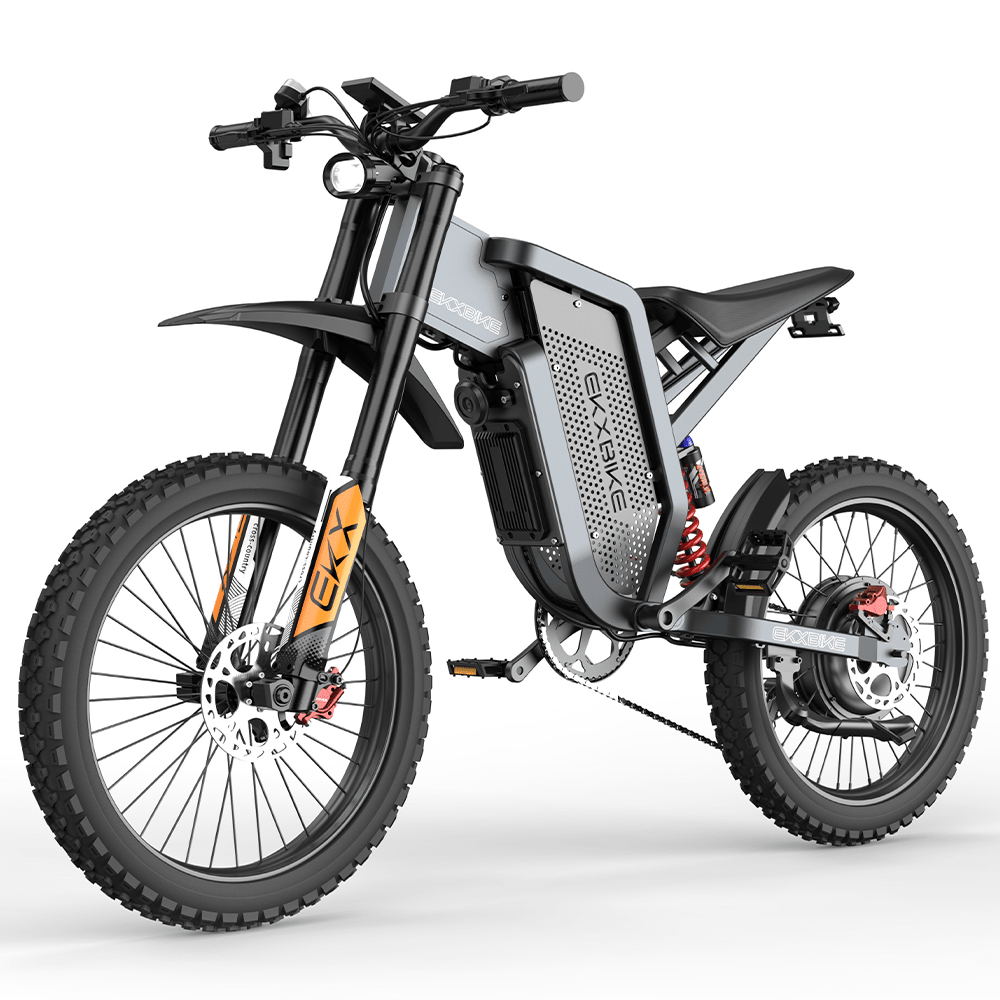
EKX X21 Max
For riders who mainly want the e-moto experience, pedals, high power, and off-road styling. Its advertised performance still places it outside Texas’s ordinary e-bike lane.
- Best match for performance-first shoppers
- Approach as an e-moto or off-road purchase
- Verify the exact location before riding

Moped-style middle ground
Ride1Up Revv1
A better bridge for shoppers who want moto-inspired styling with pedals and published class modes. The selected mode and local access rules still matter.
- Moto-inspired look with functional pedals
- Clearer specifications than an off-road dirt bike
- Check class mode before every route
Street-style starting point
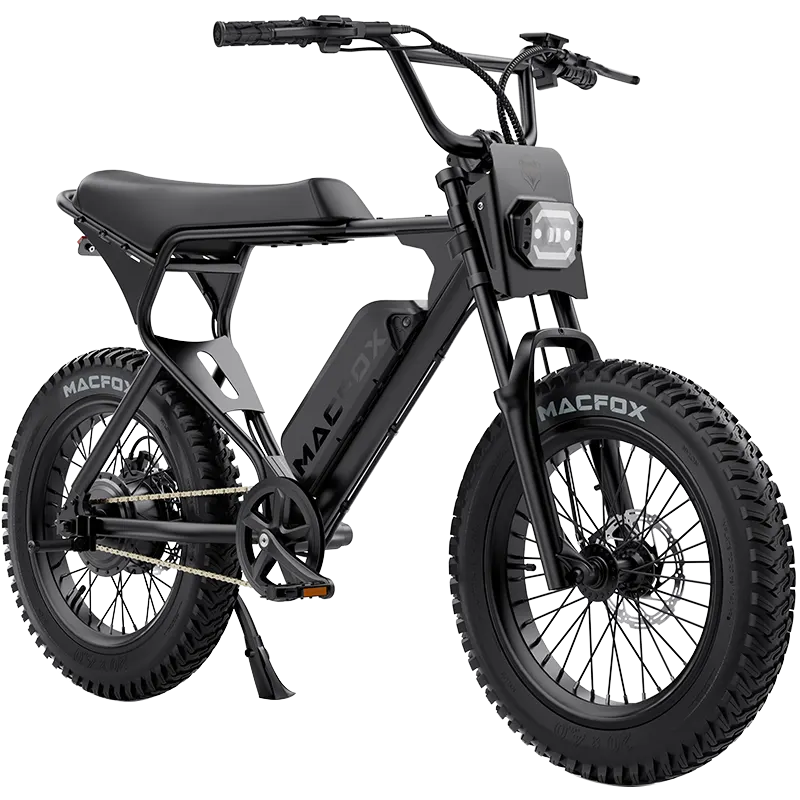
Macfox X1S
A more conventional Class 2-style starting point for riders who want a compact moto-inspired look without moving into Sur-Ron-level performance. Confirm the exact local route rules before riding.
- 500W motor with 750W peak listed by Macfox
- 20 mph factory top speed listed by Macfox
- Closer to normal e-bike research
Not sure which lane fits you?
Compare off-road e-motos, moped-style e-bikes, and conventional commuters before deciding.
Road-use requirements
Do you need a license, registration, and insurance for a Sur-Ron in Texas?
A normal Texas e-bike can use a much simpler set of rules than a motorcycle or moped. A stock Sur-Ron starts outside that easy lane, so the practical questions become: Can the exact bike be registered? Can it be insured? And does the rider have the license required for the category Texas accepts?
License
Do you need a license to ride a Sur-Ron in Texas?
If Texas accepts the exact machine as a road motorcycle, the rider needs a Class M license. The order matters, though: getting a motorcycle license does not magically make an off-highway-only bike registrable.
Registration
Can you register a Sur-Ron in Texas?
This is where I would slow down before spending money. TxDMV says off-highway motorcycles are titled but not registered, and off-highway designs are not automatically rescued by the assembled-vehicle process. Get the VIN, ownership documents, and exact model details reviewed before buying a street kit.
Insurance
Do you need insurance for a Sur-Ron in Texas?
For public-road use as a motorcycle or moped, Texas generally expects proof of financial responsibility, usually liability insurance. I would ask an insurer about the exact VIN before assuming coverage is available. A quote for theft or off-road use is not the same as road-liability coverage.
Street conversion reality
What a street kit can improve—and what it cannot change.
Lights, mirrors, turn signals, road tires, and a plate bracket can improve visibility and usability. Those upgrades may still be worthwhile for private-property or approved off-road riding. What they cannot do is override an off-highway classification or create missing registration eligibility.
VIN and ownership
Does the bike have acceptable identifying paperwork?
A bill of sale may be enough to show how you bought the bike, but it may not be enough to create a road-registration path. I would want a clear VIN and ownership trail before considering a used bike for conversion.
Eligibility
Will TxDMV accept it for road registration?
This is the yes-or-no question that matters most. If TxDMV will not accept the bike for road registration, the rest of the conversion plan stops there.
Vehicle category
Motorcycle, moped, or something else?
Do not pick the category that sounds easiest. Texas applies different limits and requirements to mopeds and motorcycles, and the bike has to genuinely fit the category being used.
Insurance
Can the exact machine be insured?
If an insurer cannot identify or cover the exact machine for road use, treat that as a warning sign—not as a minor paperwork issue.
Road equipment
Lights are only one part of compliance
Road equipment matters after the bike has a valid registration path. It cannot create that path by itself.
Best order
Verify eligibility before buying parts
My advice is simple: make the phone calls before buying parts. Ask about the exact VIN and model, and keep notes on who you spoke with and what documents they requested.
Before buying a street kit
Compare the complete cost—not only the price of lights and mirrors.
A conversion budget can grow quickly once you add road equipment, tires, protective gear, locks, transport, insurance questions, and the possibility that Texas still will not register the bike. That does not make upgrades pointless; it means they should support a legal use case you already confirmed.
Run the “buy, convert, or choose another bike” comparison first.
For many riders, the cleanest setup is an e-moto for approved off-road fun and a separate classed e-bike for commuting.
Interactive Texas check
Which Texas legal lane matches your plan?
Use this as a quick reality check before spending money. The final answer still depends on the exact bike, documents, local rules, and any TxDMV eligibility decision.
Where you can ride
Can you ride a Sur-Ron in Texas bike lanes or on sidewalks?
This is where everyday riding gets messy. A route that feels harmless on a bicycle may be treated very differently when the vehicle is a high-powered e-moto. Bike lanes, sidewalks, park paths, campuses, and apartment properties can each have separate rules.
Private property
Usually the cleanest Sur-Ron use case
This is usually the simplest option, but permission still matters. I would also check noise rules, HOA restrictions, and whether the property owner is comfortable with charging and storage.
Legal OHV venues
Texas has designated off-highway riding areas
Designated OHV areas are a much cleaner fit for the bike, but each venue can set its own decal, safety, age, and equipment rules. Check before loading the bike into the truck.
Public streets
Do not rely on off-highway paperwork
An OHV title or decal is not a street plate. I would treat those documents as proof for off-road use, not permission to ride to the trail on public streets.
Bike lanes and paths
Bike lanes follow the legal vehicle category
A stock Sur-Ron generally does not qualify for Texas e-bike access rules, so I would keep it out of bike lanes and shared paths unless the responsible local authority clearly says otherwise. That is not a judgment on the bike—it is simply the wrong legal lane for an off-road e-moto.
Parks and campuses
Property rules can be stricter
Property managers and campuses can be stricter than state law. Storage, charging, elevators, indoor access, and where the bike may be ridden can all become separate issues.
Local enforcement
Enforcement varies, but the classification does not
Many riders use these bikes without an immediate stop, while others encounter enforcement after complaints, unsafe riding, crashes, school-zone incidents, or local dirt-bike crackdowns. That inconsistency does not change the underlying classification.
For streets, errands, and everyday transportation
If the route is the priority, these are easier Texas commuter conversations.
Some riders realize that they want the Sur-Ron aesthetic more than they need Sur-Ron performance. A lightweight city bike or compact folder can be easier to store, secure, and operate within a clearly defined e-bike class.

Lightweight city bike
Ride1Up Roadster V3
Best suited to riders who want a normal bicycle feel, easier apartment or garage handling, and a cleaner commuter profile.
- Natural torque-sensor ride feel
- About 40 pounds in published configurations
- Strong fit for pavement and daily commuting

Folding and utility
Ride1Up Portola
A practical alternative for trunks, compact storage, errands, RV travel, and delivery setups. Its configurable class settings make route planning clearer than with an off-road e-moto.
- Folding frame and integrated rear rack
- Useful for apartments and limited storage
- Set the appropriate class for the route
Which Macfox fits your plan?
Three moto-inspired Macfox options, with very different everyday strengths.
Macfox is relevant to this search because its bikes keep much of the long-seat, compact-frame style that attracts Sur-Ron shoppers, while using working pedals and lower factory speed settings. Still, the exact motor rating, configuration, modifications, and local rules must match the route you plan to ride in Texas.
Best value starting point
Macfox X1S
The simplest Macfox recommendation for a rider who wants moto-inspired styling without moving into Sur-Ron-level output. Macfox currently lists a 500W motor, 750W peak output, and a 20 mph factory top speed.
- Best for neighborhood cruising and shorter commutes
- Up to 28 miles with one battery, or 56 with two, under Macfox test conditions
- Cleaner starting point than a high-powered off-road e-moto
Fat-tire stability
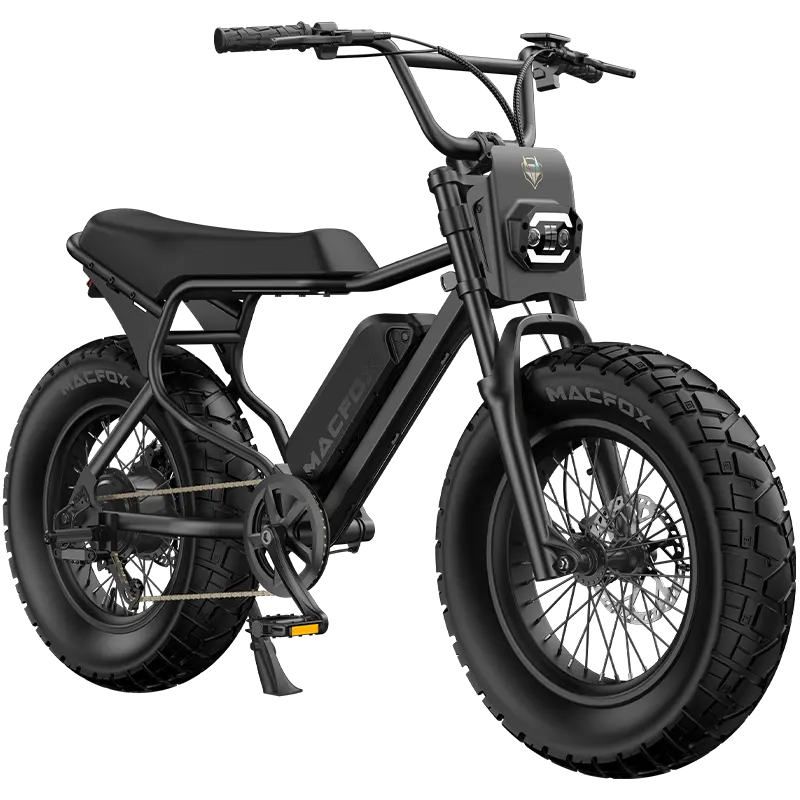
Macfox X7 / X7L
The better Macfox choice for riders who want wider tires, a more planted stance, and additional range. Macfox lists a 500W motor, 750W peak output, and a 20 mph top speed. The X7L uses a taller frame for taller riders.
- 20-inch fat tires and hydraulic brakes
- Up to 35 miles with one battery, or 70 with two, under Macfox test conditions
- X7 for riders 5′1″ and up; X7L for riders 5′3″ and up, according to Macfox
Most capable Macfox
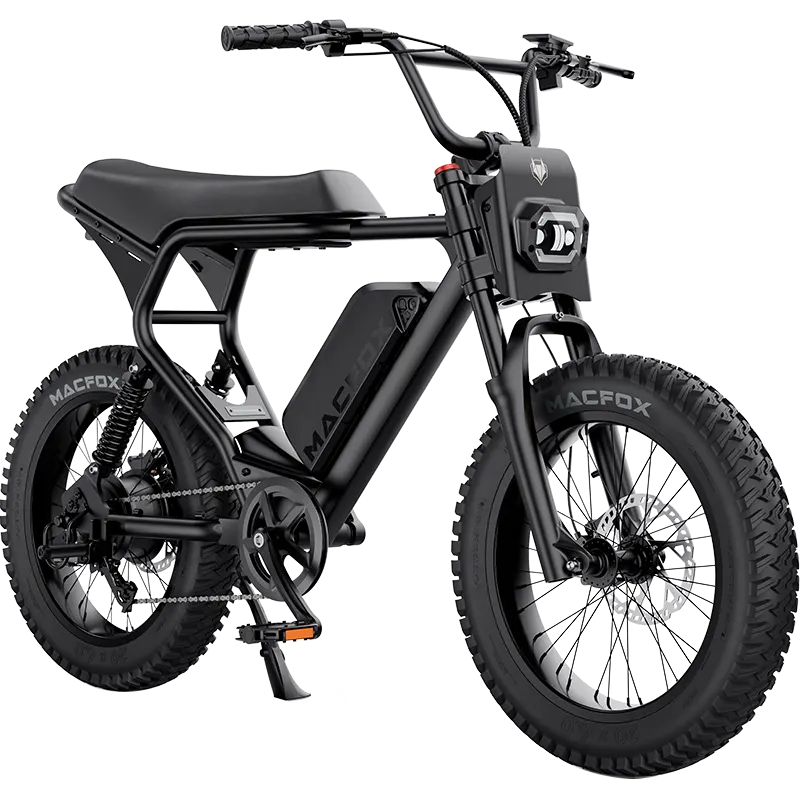
Macfox X2
The X2 adds full suspension, hydraulic brakes, a larger battery, and stronger output. Macfox currently lists a 750W rated motor, 1,000W peak output, and a 20 mph factory top speed.
- Up to 40 miles with one battery, or 80 with two, under Macfox test conditions
- Best Macfox fit for rougher pavement and longer rides
- Texas defines an e-bike motor as fewer than 750 watts, so a model listed at 750W deserves a closer classification review before purchase.
See the full Macfox lineup.
Browse every current model, or start with the collection Macfox groups around road-focused use.
Watch before you choose
See how each bike behaves before deciding which category fits you.
Videos are useful for judging size, posture, noise, acceleration, folding practicality, and whether the bike really matches the way you expect to ride. They do not decide Texas legality, so use the visual context together with the classification sections above.
Off-road performance
2026 Sur-Ron Light Bee X overview
Useful for understanding why the Light Bee belongs in the lightweight electric-motorcycle conversation rather than the ordinary commuter-bike category.
Moto-style e-bike
Ride1Up Revv1 ride review
Good context for riders who want moto styling and substantial road presence while keeping functional pedals and published e-bike modes.
Light city commuter
Roadster V3 real-world review
Shows the other end of the spectrum: a light, bicycle-like option that is easier to carry, store, pedal, and use as everyday transportation.
Compact moto-inspired option
Macfox X1S review
Helpful for shoppers who want a compact motorcycle-inspired appearance while staying closer to a factory Class 2-style specification.
Already own a Sur-Ron?
Buy gear for safety, security, and transport—not as proof of street legality.
Existing owners are a major part of the audience for this guide. Protective equipment and theft prevention are useful whether the bike is ridden on private property, transported to a legal riding area, or stored in a garage.
Protection
Full-face helmet
At e-moto speeds, a casual city bicycle helmet is not the level of coverage I would choose.
Theft prevention
Heavy-duty lock and chain
A lightweight e-moto is valuable, recognizable, and relatively easy to move. Use more than a basic cable lock.
Recovery
Hidden tracker or alarm
A tracker cannot prevent every theft, but it adds another layer for garages, shared storage, and transport stops.
Affiliate links may earn RideStreetLegal a commission at no additional cost to you. Safety equipment and accessories do not change the legal classification of the bike.
Choose your next step.
Keep researching the Sur-Ron you want, compare e-moto-style alternatives, or move into a clearly classed commuter based on your actual route.
FAQ
Questions I would answer before riding or buying one in Texas.
Is a stock Sur-Ron street legal in Texas?
No—not as a normal Texas e-bike. In stock form, the Light Bee X is an off-road dirt bike with specifications and controls outside the state’s Class 1, 2, and 3 framework.
Can I register a Sur-Ron as a motorcycle in Texas?
Possibly, but only if Texas accepts the exact machine and paperwork for a road-registration category. An off-highway title, bill of sale, or box of street parts is not enough by itself.
Will adding pedals make a Sur-Ron legal?
No. A pedal kit changes the hardware, but it does not erase the bike’s power, speed, throttle setup, factory purpose, or registration issues.
Can I ride a Sur-Ron in a Texas bike lane?
I would not assume so. Bike-lane access depends on the vehicle actually qualifying under the bicycle or electric-bicycle rules, plus any local restrictions.
Do I need a motorcycle license to ride a Sur-Ron in Texas?
If the bike is legitimately titled and registered as a road motorcycle, the rider needs a Texas Class M license. The license comes after eligibility—it does not make an off-highway bike eligible.
Do I need insurance for a Sur-Ron in Texas?
For public-road use as a motorcycle or moped, expect to need proof of financial responsibility, usually liability insurance. A policy alone does not fix an unregistrable bike.
Can I ride a Sur-Ron on a Texas sidewalk?
I would avoid assuming sidewalk access. Local rules may control it, and a stock Sur-Ron does not automatically receive the same access as a bicycle or qualifying e-bike.
Where can I legally ride one?
Private property with permission and designated OHV venues are the clearest places to start. Before going, check the venue’s decal, age, safety, and equipment requirements.
Is a HiKeep K6T street legal in Texas?
I would not treat the K6T as a normal Texas e-bike without a closer review. Its advertised dual motors, 3,000-watt peak output, and 30-plus-mph capability place it outside the easy Class 2 conversation.
Official and product references
Sources for the Texas legal framework.
- Texas Transportation Code Chapter 664 — electric bicycle standards and classes
- Texas Transportation Code Chapter 551 — electric-bicycle operation
- TxDMV registration guidance, including off-highway motorcycles
- TxDMV assembled-vehicle eligibility guidance
- Texas DPS motorcycle-license guidance
- Texas Department of Insurance motorcycle and moped insurance guidance
- TxDMV Assembled and Reconstructed Vehicle Manual
- Texas Parks and Wildlife OHV Program
- Texas OHV venues
- Sur-Ron Canada FAQ and off-road classification context
- EKX X21 Max official product page
- HiKeep K6T official product page
Comparing EKX, Sur Ron, or Talaria-style bikes?
High-powered e-motos need a different buying checklist than normal Class 2 and Class 3 commuter ebikes. Compare the fun factor separately from the legal question: where you will ride, whether the bike has a valid road-use path, what equipment is required, and how much risk you are comfortable with.
Other EKX models to compare
Affiliate disclosure: RideStreetLegal may earn a commission if you buy through EKX links, at no extra cost to you. Product specs, prices, availability, and legal requirements can change. Always verify the current product page and local rules before buying or riding.
Texas Sur Ron update
Before riding a Sur Ron-style bike in Texas, check the state page and the main risk hub.
State-specific Sur Ron questions are high-intent because riders are not just browsing — they are trying to decide whether a bike can be used where they live. This kind of post works best when it stays trust-first: explain the legal risk clearly, then point readers to the main Sur Ron laws hub and budget e-moto alternatives only after the legal question is understood.
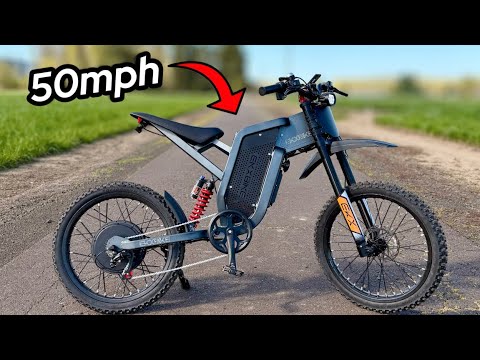
Texas riders usually need to compare the bike, not just the law
Specs only tell part of the story. The riding position, frame shape, and overall size make it much easier to see why Sur Ron-style bikes sit in a different category from normal commuter ebikes.

What to check locally
The state rule is only part of the answer.
| Check | Why it matters | Where to go next |
|---|---|---|
| State classification | The bike may not fit normal low-speed ebike definitions. | Read the state ebike law page. |
| City/park/path rules | Local restrictions can differ from the state-level category. | Check city, park, campus, and trail rules. |
| Registration path | If the bike needs to be treated as a motor vehicle, paperwork becomes the key issue. | Check registration and VIN requirements. |
| Equipment and insurance | Lights or mirrors help visibility, but do not automatically create legal status. | Confirm required equipment and insurance before riding. |
Affiliate disclosure: RideStreetLegal may earn a commission if you buy through EKX, Amazon, ADO, ENGWE, or other partner links, at no extra cost to you. Product specs, availability, shipping, pricing, local laws, and road-use requirements can change. Always verify the current product page and your local rules before buying or riding. Educational only, not legal advice.
State-specific e-moto comparison
The state law answer is easier to understand with real bike examples.
State pages should not only say “maybe” or “check local rules.” They should show why the question is complicated. A Sur Ron Light Bee X, Talaria Sting R MX4, EKX X21 Max, and Stark VARG do not all sit in the same category, and none should be assumed to be a normal street-legal ebike just because they are electric.
| Model | Why riders compare it | Battery / power reference | Speed reference | Legal-use takeaway | Next step |
|---|---|---|---|---|---|
| Sur Ron Light Bee X | Lightweight off-road e-moto baseline | 60V battery platform; Luna listing shows 34Ah with 38Ah upgrade options | Commonly discussed around the mid-40 mph off-road lane; verify current model-year specs | Luna states the bike is sold as an off-road vehicle, not for street use. | Official SurronRetail reference |
| Talaria Sting R MX4 | Closest Sur Ron-style rival | 60V 45Ah / 2700Wh battery listed by Luna | Factory limited to 20 mph; Luna notes over 40 mph if the limiter is removed | Luna states it is sold as an off-road vehicle, not for street use. | Retail reference |
| EKX X21 Max | Budget e-moto with pedals | 60V 30Ah battery; 3000W rated / 6000W peak listed by EKX | 50 mph claimed by EKX | Pedals can make it feel more bicycle-adjacent, but this still needs an e-moto legal check. | Check EKX X21 MaxLegal check |
| EKX TX1 | Budget dirt-bike-style EKX | 60V 30Ah battery; 3000W rated / 6000W peak listed by EKX | 45 mph claimed by EKX | More dirt-bike-first than commuter-first; research off-road/private-land use first. | Check EKX TX1 |
| Stark VARG EX / MX | Premium full-size electric motorcycle lane | Full-size electric off-road platform; verify configuration on Stark’s site | Far beyond normal ebike category | Treat as a motorcycle/off-road motorcycle purchase, not an ebike replacement. | Stark VARG EXStark VARG MX |
| Stark VARG SM | Purpose-built road/supermoto lane | Street/supermoto version from Stark | Road-use category depends on market, homologation, and local registration | This is the lane riders should study when they want a purpose-built road-use electric motorcycle rather than an ebike gray area. | Stark VARG SM |
Best local takeaway
Local road use depends on the category, not the brand hype.
If the bike is off-road-focused, high-powered, or not clearly registered/insured for public-road use, treat it as a risk until the paperwork says otherwise. For EKX specifically, the pedals may make the bike feel more bicycle-adjacent, but state and local rules still decide whether that matters legally.
Affiliate disclosure: RideStreetLegal may earn a commission if you buy through EKX, Amazon, or other partner links, at no extra cost to you. Sur Ron, Talaria, and Stark links here are included as editorial reference links unless otherwise stated. Specs and road-use status can change by model year, trim, retailer, state, and configuration. Always verify the current product page and your local rules before buying or riding. Educational only, not legal advice.