Are Speed-Unlocked Ebikes Legal?
Quick answer
Speed-unlocked ebikes are risky for public use.
An ebike can be legal in its locked factory class mode, then become legally questionable when a display, app, controller setting, or off-road mode lets the motor assist above the class limit.
The problem is not that a bike can physically go faster. The problem is motor assistance, throttle behavior, wattage, labeling, and where you ride it. A 20 mph Class 2 commuter and a 35 mph unlocked fat-tire bike may look similar online, but they can create very different legal risk on streets, paths, campuses, and bike lanes.
The short version before you buy
Unlock risk checker
What happens when the speed limiter comes off?
This quick tool is not legal advice, but it gives you the same sorting logic I would use before buying a bike from Amazon, Walmart, a direct brand, or a high-power e-moto seller.
What the law usually cares about
The biggest number on the product page is not the legal category.
Many U.S. ebike rules revolve around the same core ideas: fully operable pedals, limited motor assistance, a motor-power ceiling, and a clear separation between bicycles and motor vehicles. The federal low-speed electric bicycle framework is often cited because it uses pedals, less than 750 watts, and a low motor-powered speed threshold. State road-use rules then decide where each class can actually be ridden.
That is why speed unlocks matter. A product listing may say the bike is “Class 2 by default” but also advertise an off-road mode, race mode, 35 mph unlock, dual-motor setting, or app-based limiter removal. The locked mode may be easier to defend. The unlocked mode may move the bike into moped, motor-driven-cycle, motorcycle, or off-road-vehicle territory depending on your state.
Locked vs unlocked: what changes?
| Setup | What it may mean | Public-road risk | Buyer advice |
|---|---|---|---|
| Class 2 locked mode | Throttle assistance generally stops at 20 mph. | Lower, assuming the bike truly fits state rules and local access is allowed. | Good for city errands, delivery, apartments, and riders who want clarity. |
| Class 3 locked mode | Pedal assistance commonly stops at 28 mph; throttle rules vary by state and bike setup. | Moderate. Faster road riding can be legal, but access to paths and sidewalks may be restricted. | Good for commuting when the class label, speedometer, and documentation are clear. |
| Off-road / race mode | The bike may exceed class speed limits or change throttle behavior. | High on public roads, bike lanes, greenways, parks, and campuses. | Use only where that mode is allowed. Do not rely on “private property” language for city riding. |
| 30-35+ mph unlocked fat-tire bike | May behave closer to a moped or e-moto than a normal ebike. | High if ridden as a bicycle in public places. | Check registration, insurance, license, brakes, tires, and service support before buying. |
| Sur Ron / Talaria / electric dirt-bike style | Usually an e-moto or off-road-performance question, not a normal ebike question. | Very high for bike lanes and ordinary street use without a road-use path. | Start with electric dirt-bike laws, Sur Ron laws, and Talaria street-legality guidance. |
Marketplace red flags
Be careful with listings that sell the unlock more than the bike.
Online listings are written to convert shoppers. They often highlight top speed, peak wattage, dual motors, fat tires, suspension, and aggressive styling because those numbers feel exciting. That does not answer the legality question.
Safer buying lanes
If you want public-road commuting, clarity beats raw speed.
The best choice is not always the fastest bike. It is the bike you can explain clearly if a landlord, bike shop, officer, parent, campus security guard, insurance adjuster, or trail manager asks what class it is.
Lectric XP4 / XP Lite lane
Best for shoppers who want a practical folding/value ebike with mainstream U.S. support instead of a mystery unlock bike from a marketplace listing.
Ride1Up Portola or Roadster V3
Portola fits folding, delivery, and apartment pages. Roadster V3 fits riders who want a lighter, more bicycle-like commuter instead of a high-speed fat-tire machine.
ADO / ENGWE commuter options
ADO and ENGWE make more sense for riders who want city commuting, folding storage, and daily-use practicality than for riders chasing unlocked top speed.
Fiido city and folding bikes
Fiido belongs in the clean city, lightweight, folding, and budget commuter lane. It is a better fit for safer public-use pages than for e-moto or speed-unlock content.
Velotric Discover, Tempo, and Fold lanes
Velotric is a better public-road comparison than a vague speed-unlocked listing because the lineup is built around commuter, city, folding, cargo, fat-tire, and trike categories with clearer model positioning.
When speed is the actual goal
If you want 35+ mph, stop shopping like it is a bicycle.
There is nothing wrong with wanting more performance. The mistake is pretending the legal category did not change. If your real goal is electric motorcycle-style speed, compare e-motos honestly and check where they can be used.
Read Sur Ron laws
Read e-dirt bike laws
Read street-legal guide
Gear does not fix legality
Use safety gear, but do not confuse it with compliance.
A helmet, lights, mirrors, gloves, and a lock make riding smarter. They do not convert an unlocked high-speed bike into a legal public-road ebike.
Check Amazon
Before you buy
Ask these questions before paying for an unlockable ebike.
Best next pages to read
Read Amazon guide
FAQ
Speed-unlocked ebike questions
Are speed-unlocked ebikes legal?
Is it illegal to unlock an ebike speed limit?
Can a Class 2 ebike go over 20 mph?
Can a Class 3 ebike have a throttle?
Are private-property modes legal?
Can unlocking void a warranty?
What should buyers look for?
What is the safest choice for commuting?
Final recommendation
Keep the legal mode boring. Save the fast mode for places where it is allowed.
If your goal is public-road commuting, buy the clearest legal category you can. Choose a bike with a documented class, a stable speed limit, credible battery safety information, and real support.
If your goal is high-speed performance, be honest about the category. Verify where it can be ridden, whether it can be registered if needed, and whether your local rules treat it as an ebike, moped, motor-driven cycle, motorcycle, or off-road vehicle.
RideStreetLegal provides general buyer education, not legal advice. Always verify current state law, city rules, land-manager rules, insurance requirements, and enforcement policies before buying or riding.
Looking at a high-speed ebike or budget e-moto?
Once a bike moves into 35–50 mph, 1000W+, or electric dirt bike territory, the shopping question changes. The bike may be fun and still be a poor fit for bike lanes, sidewalks, parks, campuses, or public-road commuting.
Other EKX models to compare
Affiliate disclosure: RideStreetLegal may earn a commission if you buy through EKX links, at no extra cost to you. Product specs, prices, availability, and legal requirements can change. Always verify the current product page and local rules before buying or riding.
High-power buyer warning
If the listing talks about 1000W, 1500W, 2000W, 3000W, or speed unlocks, slow down before buying.
High-wattage listings can be exciting, but they also make the legal category harder to explain. A bike can be fun and still be a poor match for public roads, bike lanes, campuses, parks, or delivery routes.
Use the bike style as the first red flag
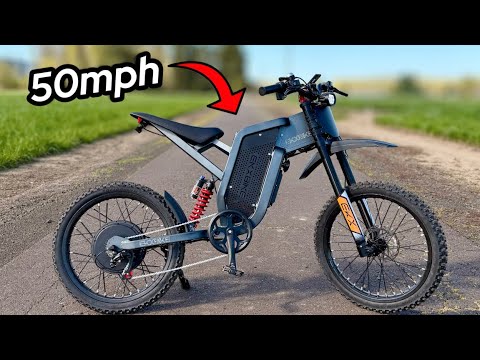
Specs only tell part of the story. The riding position, frame shape, and overall size make it much easier to see why Sur Ron-style bikes sit in a different category from normal commuter ebikes.

The quick filter
How I would sort the listing.
| Listing claim | What it may mean | Best next page |
|---|---|---|
| 1000W+ motor | May fall outside common low-speed ebike limits. | /are-1000w-ebikes-legal |
| Speed unlocked | The bike may no longer behave like the class label suggests. | /are-speed-unlocked-ebikes-legal |
| 35 mph top speed | Higher-risk than a normal Class 3 commuter. | /are-35-mph-ebikes-legal |
| 50 mph top speed | Usually an e-moto/moped/motorcycle-level question. | /are-50-mph-ebikes-legal |
| No pedals or token pedals | Pedals alone do not settle the legal category. | /do-pedals-make-electric-dirt-bike-street-legal |
Affiliate disclosure: RideStreetLegal may earn a commission if you buy through EKX, Amazon, ADO, ENGWE, or other partner links, at no extra cost to you. Product specs, availability, shipping, pricing, local laws, and road-use requirements can change. Always verify the current product page and your local rules before buying or riding. Educational only, not legal advice.
Specs that change the legal question
The numbers explain why these are not normal commuter ebikes.
Legal pages get stronger when they show the actual spec gap. A 60V off-road e-moto, a 45Ah Talaria, a 50 mph EKX X21 Max, and a full-size Stark VARG are not in the same lane as a 20–28 mph commuter ebike.
| Model | Why riders compare it | Battery / power reference | Speed reference | Legal-use takeaway | Next step |
|---|---|---|---|---|---|
| Sur Ron Light Bee X | Lightweight off-road e-moto baseline | 60V battery platform; Luna listing shows 34Ah with 38Ah upgrade options | Commonly discussed around the mid-40 mph off-road lane; verify current model-year specs | Luna states the bike is sold as an off-road vehicle, not for street use. | Official SurronRetail reference |
| Talaria Sting R MX4 | Closest Sur Ron-style rival | 60V 45Ah / 2700Wh battery listed by Luna | Factory limited to 20 mph; Luna notes over 40 mph if the limiter is removed | Luna states it is sold as an off-road vehicle, not for street use. | Retail reference |
| EKX X21 Max | Budget e-moto with pedals | 60V 30Ah battery; 3000W rated / 6000W peak listed by EKX | 50 mph claimed by EKX | Pedals can make it feel more bicycle-adjacent, but this still needs an e-moto legal check. | Check EKX X21 MaxLegal check |
| EKX TX1 | Budget dirt-bike-style EKX | 60V 30Ah battery; 3000W rated / 6000W peak listed by EKX | 45 mph claimed by EKX | More dirt-bike-first than commuter-first; research off-road/private-land use first. | Check EKX TX1 |
| Stark VARG EX / MX | Premium full-size electric motorcycle lane | Full-size electric off-road platform; verify configuration on Stark’s site | Far beyond normal ebike category | Treat as a motorcycle/off-road motorcycle purchase, not an ebike replacement. | Stark VARG EXStark VARG MX |
| Stark VARG SM | Purpose-built road/supermoto lane | Street/supermoto version from Stark | Road-use category depends on market, homologation, and local registration | This is the lane riders should study when they want a purpose-built road-use electric motorcycle rather than an ebike gray area. | Stark VARG SM |
The clean explanation
Pedals can soften the bike’s feel, but they do not erase the spec sheet.
This is the safest EKX angle: the pedal setup can make the bike feel more bike-adjacent than a pure no-pedal electric dirt bike, but once speed and power move into e-moto territory, the buyer still needs to check registration, equipment, insurance, and where the bike is allowed.
Affiliate disclosure: RideStreetLegal may earn a commission if you buy through EKX, Amazon, or other partner links, at no extra cost to you. Sur Ron, Talaria, and Stark links here are included as editorial reference links unless otherwise stated. Specs and road-use status can change by model year, trim, retailer, state, and configuration. Always verify the current product page and your local rules before buying or riding. Educational only, not legal advice.