Updated July 26, 2026 – price, stock, fit and policy checked
Ride1Up Utility Panniers review
Ride1Up Utility Panniers Review: the $70 upgrade that ends backpack duty
A good pannier disappears into the ride. It does not sway through corners, brush your heel at every pedal stroke or feed a loose strap to the spokes. Ride1Up’s dual-sided setup gets the fundamentals right at a reasonable price, but it is water-resistant rather than waterproof, uninsulated, and unusually strict about which Vorsa rack it will fit.
RideStreetLegal may earn from qualifying purchases through partner links, at no additional cost to you. Product facts below are separated from practical rider guidance; price, stock and policies can change.
Bottom line
Worth $70? Yes, if your rack and cargo agree with the fine print.
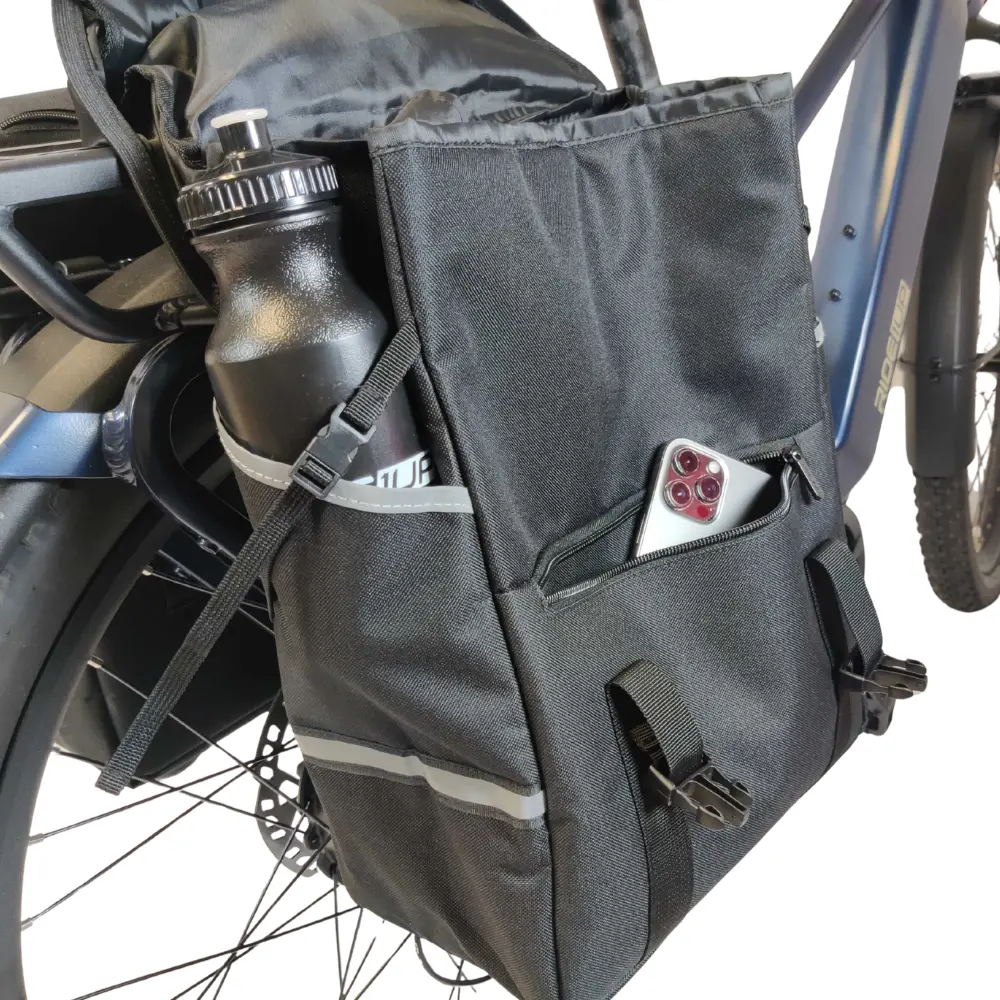
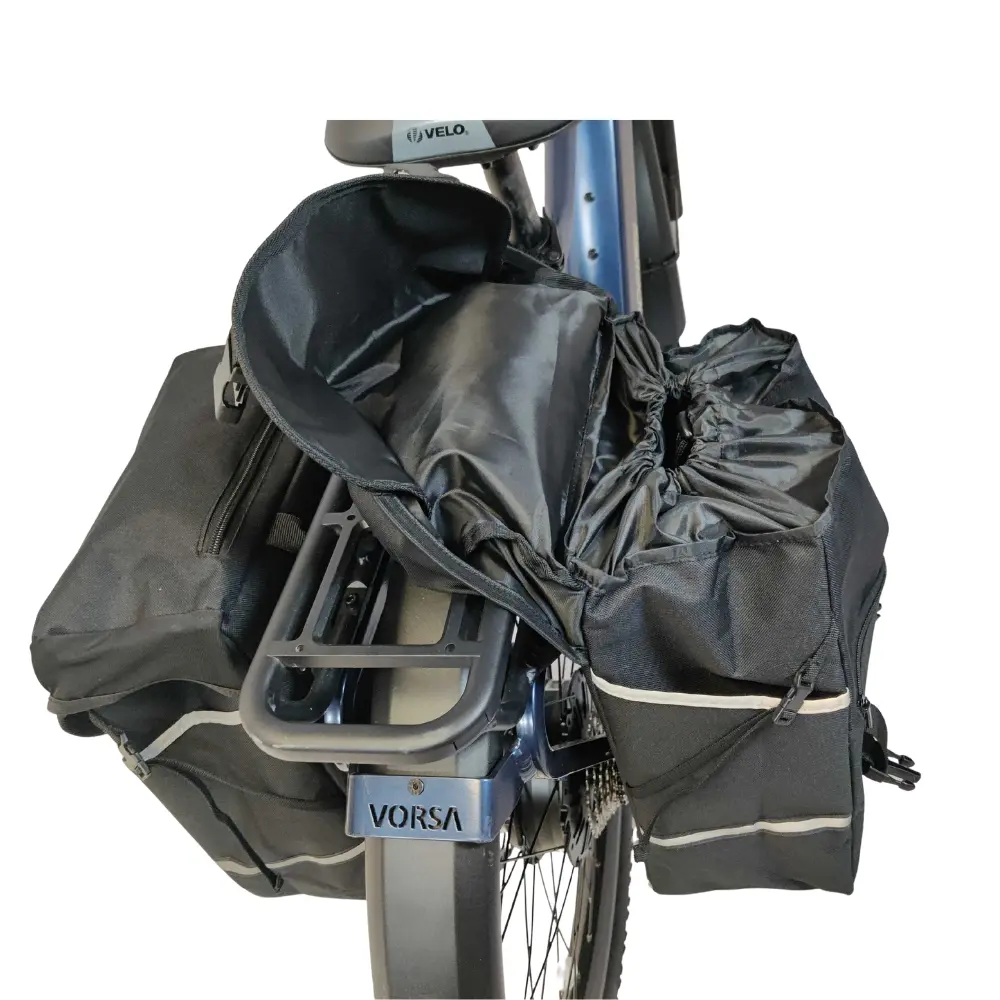
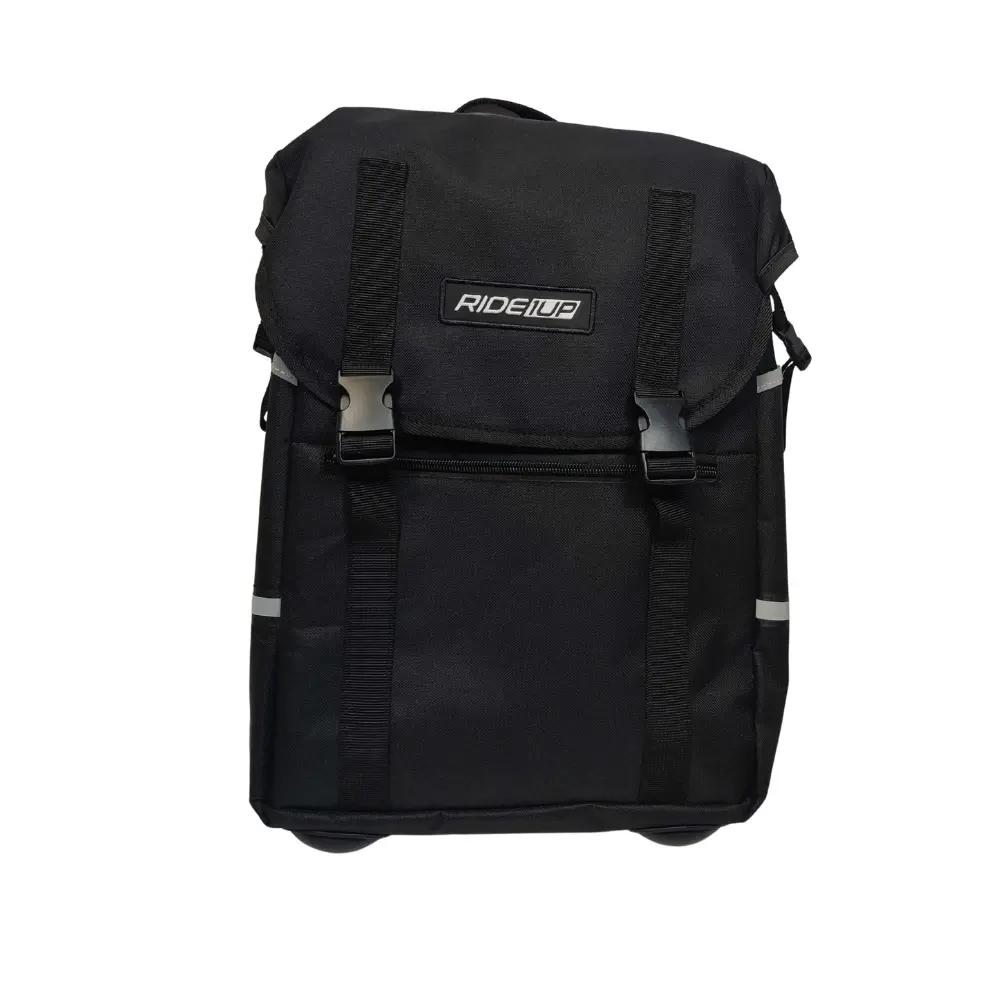
The Ride1Up Utility Panniers occupy a useful middle lane. They are less expensive and less elaborate than premium waterproof touring bags, but far more bike-specific than tossing a reusable grocery bag over the rack and asking gravity to behave. You get two soft-sided bags, four rack hooks per the installation guide, inner securing straps, top flaps, drawstring closures, reflective trim, a bottle holster and a quick-access pocket.
For commuting, errands and support gear on a delivery setup, that is a lot of practical storage for $70. The strongest argument is not capacity alone; it is balance. Splitting dense cargo across both sides keeps the bike from feeling like it is permanently turning toward a gallon of milk.
The catch is equally clear. These are not dry bags, not insulated food carriers and not hard cases. A laptop deserves its own waterproof sleeve. Hot food deserves an insulated bag. Anything you would mourn should come indoors with you.
Verified specifications
The numbers that decide whether these panniers work for you.
Ride1Up’s current listing gives unusually useful limits for a soft bag. It also contains a compatibility sentence that deserves to be read twice before checkout.
| Specification | Official listing | What it means on the bike |
|---|---|---|
| Configuration | Dual-sided soft panniers | Load both sides deliberately; the second bag is a handling tool, not merely bonus storage. |
| Dimensions | Approx. 15 in H x 11 in L x 6 in W | Tall enough for a lock, rain layer and compact grocery load; awkward rigid objects still need measuring. |
| Weight capacity | 12 lb per side, 24 lb total | One 15-pound object is not acceptable just because the other bag is empty. |
| Weather protection | Water-resistant exterior, top flaps and internal drawstrings | Reasonable for dust and light rain. Use inner dry bags for electronics or serious weather. |
| Organization | Bottle holster and quick-access zip pocket | Useful for a bottle, keys or small tools; a visible phone should not become a curbside donation. |
| Visibility | Reflective strips on front and sides | Helpful after dark, but still secondary to working bike lights and visible clothing. |
| Colors | Black and olive green listed | Availability can vary by selection. |
Capacity math: the bags’ approximate box volume is about 16.2 liters per side, or 32.4 liters combined, before allowing for fabric taper, closures and unusable corners. That is a geometric estimate, not a manufacturer-published liter rating.
Real rider use cases
What 12 pounds per side looks like outside a specification table.
Enthusiasts tend to ask whether a bag is “big enough.” The better question is whether the load fits, stays balanced and remains clear of the moving parts that have no interest in negotiating with nylon.
Daily commute
Lock low, laptop protected, rain shell easy to reach
Put the dense chain or U-lock low in one bag. Counter it with a laptop in a padded waterproof sleeve, lunch and spare layer on the other side. The bike should feel neutral when you lift it off the kickstand. If it immediately leans like it has made a decision, rebalance before riding.
Keep the frequently used items near the top. Nobody enjoys excavating a tube patch kit beneath yesterday’s lunch while rain enters the plot.
Grocery run
Balance by weight, not by how full the bags look
Cans, drinks and glass jars become heavy long before a soft bag looks full. Split dense items across both sides, keep crushable produce high, and weigh a representative load at home once. After that, your hands will develop a useful sense for what 12 pounds feels like.
The 24-pound total is respectable for a quick grocery mission. It is not permission to recreate a warehouse-club cart on two wheels.
Delivery support
Use the panniers as the pit crew, not the dining room
These bags make sense beside a dedicated insulated delivery box. Put the hot or cold order in the insulated carrier; use the panniers for a lock, rain gear, battery-safe charger storage while parked, drink carrier, repair kit, spare gloves and other support gear. That keeps food upright and separates customer orders from the less glamorous contents of a working bike.
If you deliver at night, the reflective strips help define the bike’s width, but they do not replace a bright tail light and side visibility.
Weekend ride
Bring the layer you will otherwise complain about not bringing
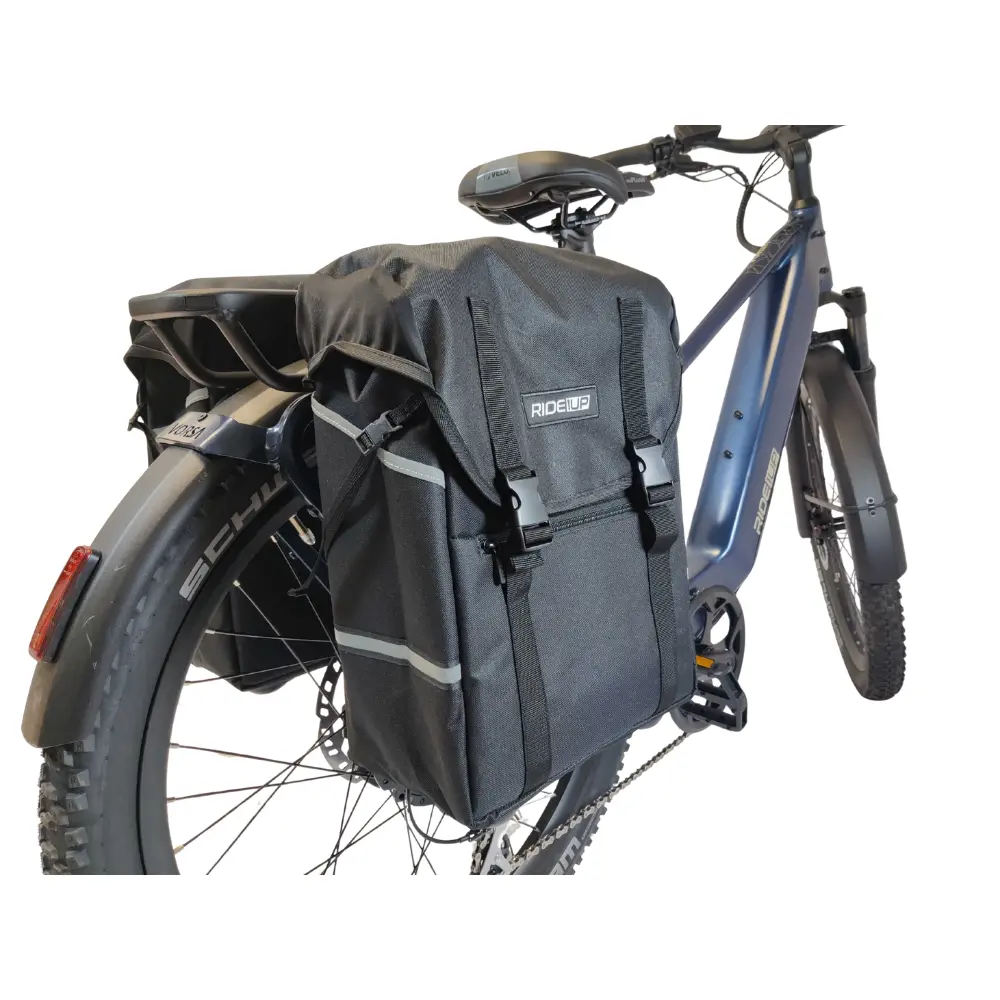
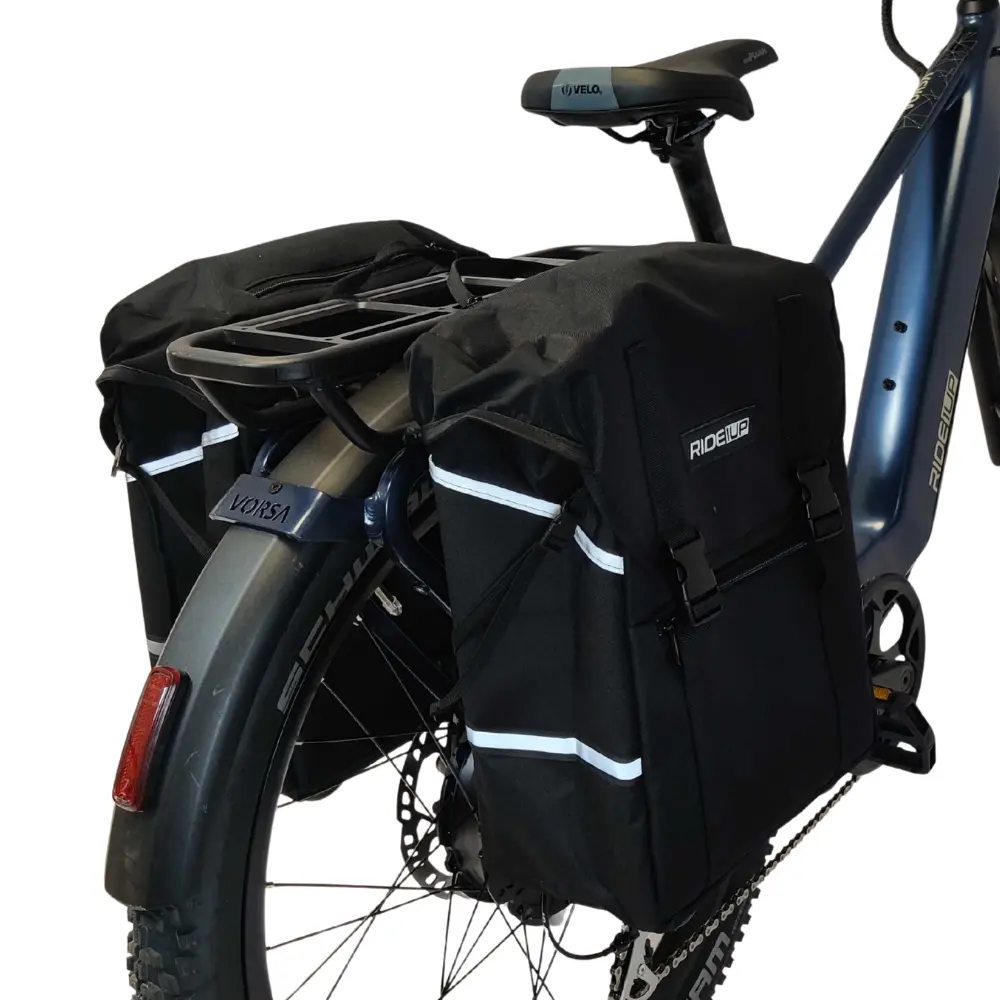
For a long recreational ride, one side can carry a wind layer, snacks and spare gloves; the other can hold a lock, tools, tube and compact pump. The bags sit high by design, which Ride1Up says helps avoid heel strike and keeps heavy cargo away from the rear derailleur.
Rough pavement changes the equation. Use the inner straps, close the drawstrings, secure the flaps and add a bungee when needed. A bag that feels stable in the driveway can become conversational over washboard.
Rack compatibility
The fit question has one hard no and one qualified yes.
Standard Ride1Up racks
Designed for Ride1Up rear cargo racks
The current product page describes compatibility across Ride1Up rear cargo racks, subject to the exceptions below. On accessory-rack models such as the CF Racer1, Core-5, Turris and LMT’D, Ride1Up’s support guide says the clips attach to the single top bar.
Qualified yes
Prodigy V2
Ride1Up calls it compatible, but says the fit is very tight and may require extra effort. Treat that as a reason to dry-fit carefully before loading, not a challenge to introduce the hook to a hammer.
Hard no
Vorsa Extended Rack
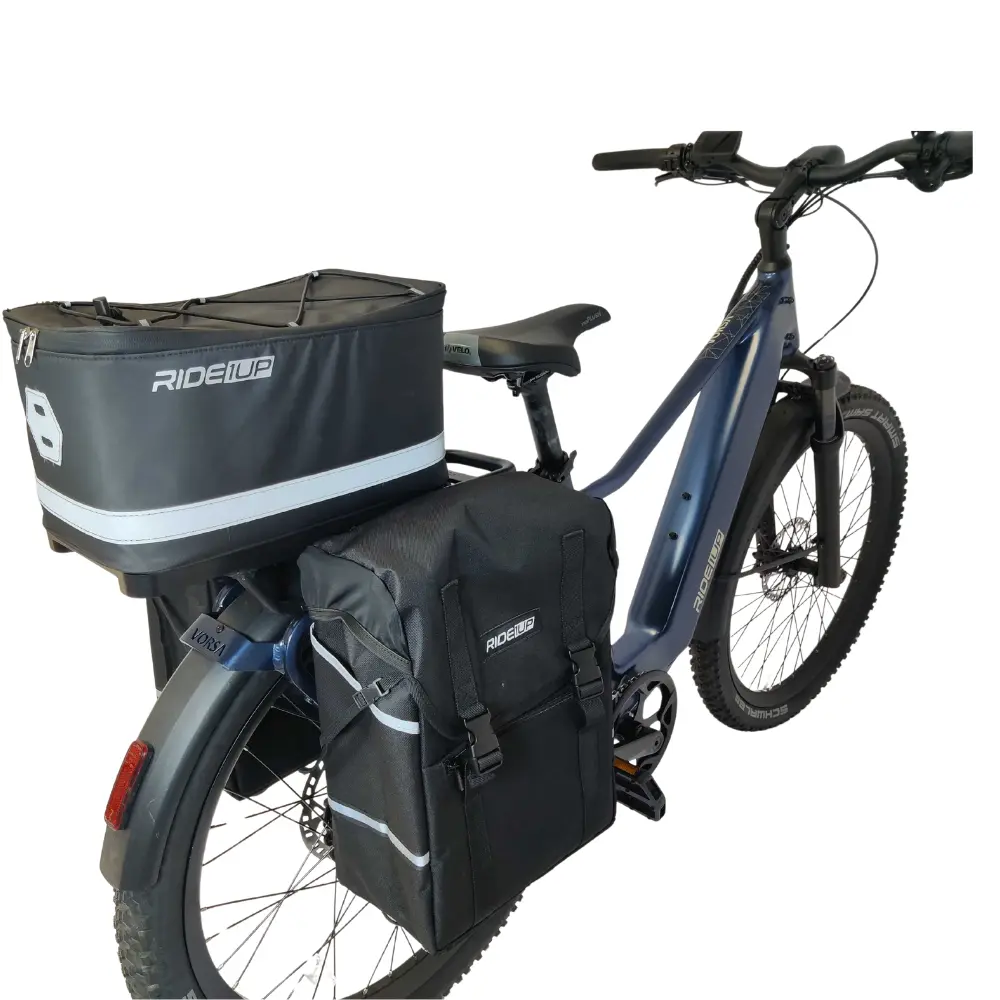
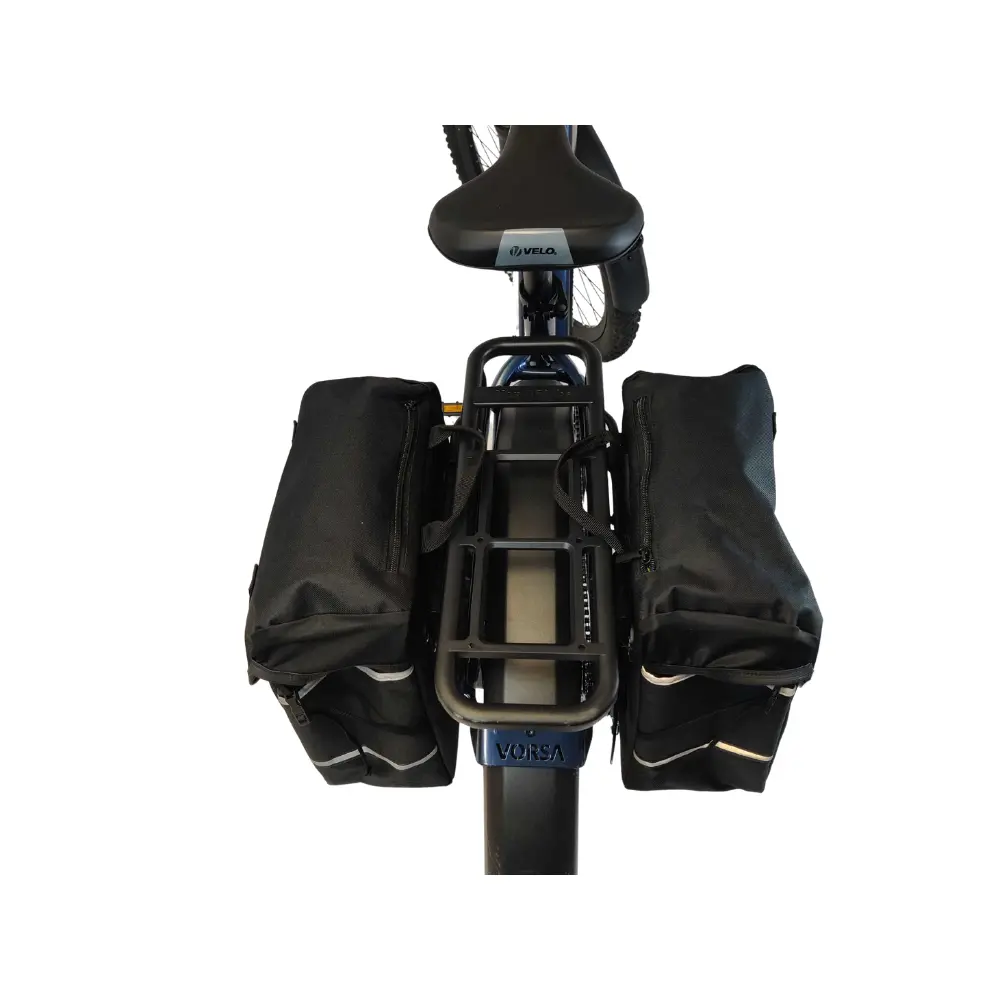
The current listing explicitly says these panniers are not compatible with the Vorsa Extended Rack. The official photos show a Vorsa with its standard rear rack, which is not the same accessory.
Connect+ integrated racks
Use the second bar
Ride1Up’s support guide directs Portola, 700 Series, Cafe Cruiser and Rift riders to attach the clips to the second bar on the integrated rack. That placement helps the bags sit high and stable.
Revv1 utility rack
Also use the second bar
The current support guide includes the Revv1 Utility Rack and Handle accessory and specifies the second bar. This is more current and precise than older compatibility pages that may refer to a Revv1 without that rack setup.
Before removing tags: identify the exact rack, not only the bike model. Ride1Up’s accessory return window is 14 days, and installed or used items are ineligible. A 25% restocking fee and return shipping also apply to approved accessory returns.
Interactive fit and load check
Check the rack first, then check each side.
Enter the planned weight in each bag. The tool uses Ride1Up’s published 12-pound-per-side limit and the current compatibility notes; it does not replace a physical clearance check.
Installation and first ride
The five-minute setup that prevents the memorable kind of failure.
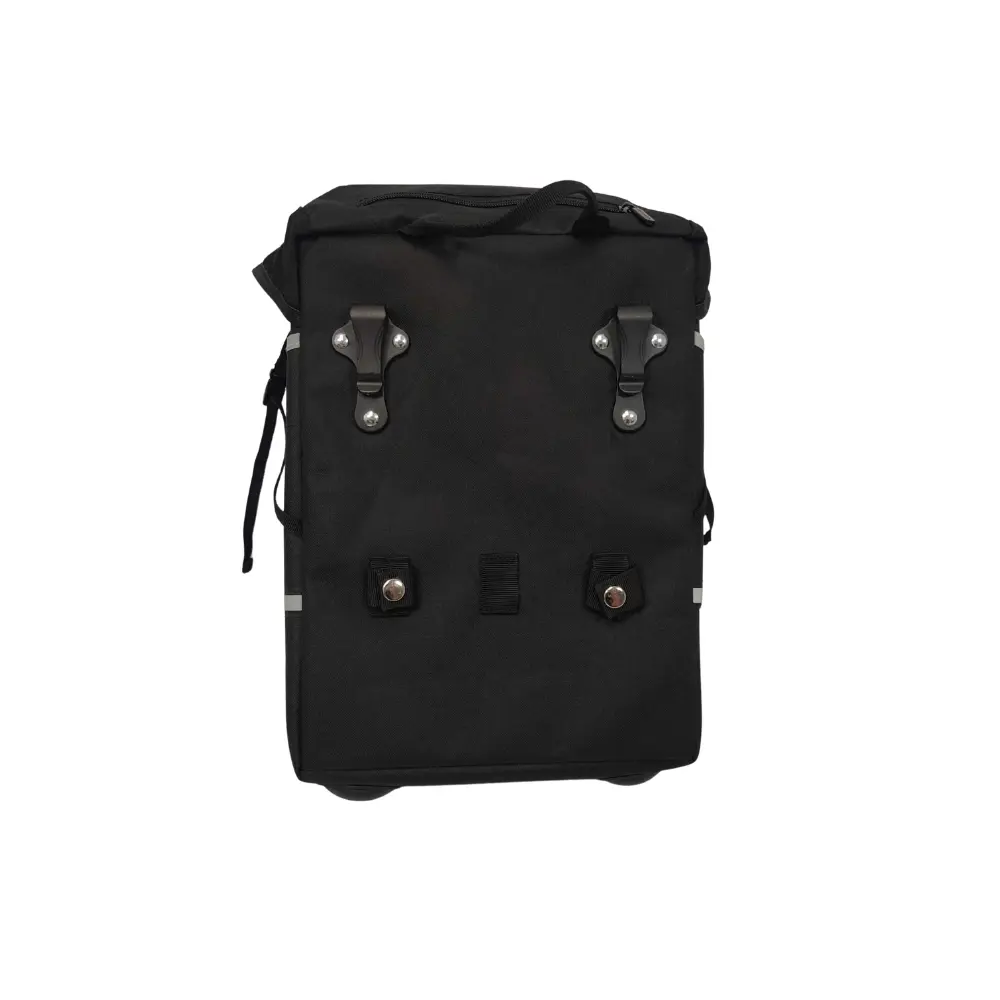
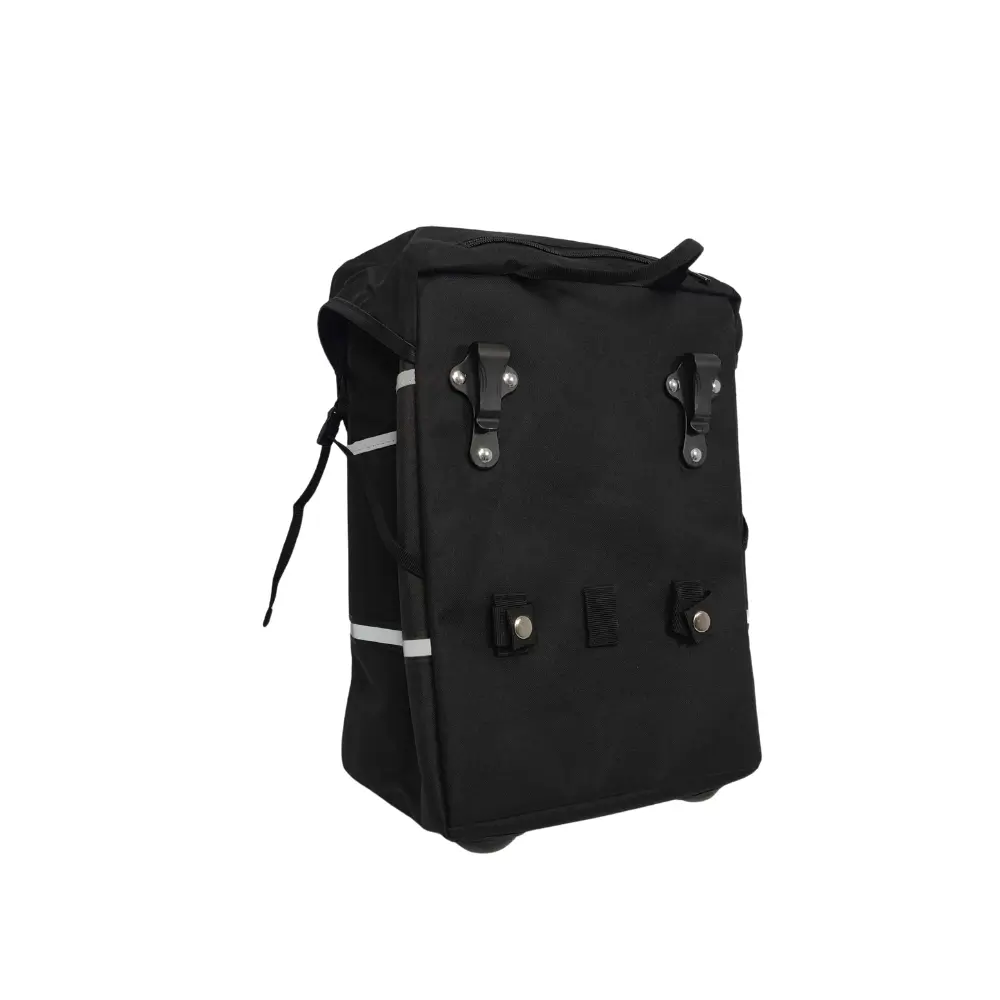
Ride1Up specifically warns that hook breakage becomes a concern with heavy loads and rough terrain. Every hook should be fully engaged.
Fasten the Velcro straps against the rack so the bags cannot flap, walk backward or bounce off their intended bar.
Adjust the Velcro connecting the two sides so both bags sit evenly and share support across the top of the rack.
Compress the bag with your hand and check spokes, brake rotor, tire, chain and derailleur. Soft luggage changes shape when loaded.
Pedal backward in your normal shoes, then ride slowly. Move the bags higher or farther rearward if your heel brushes them.
Start with a light load, roll over a driveway lip and recheck every attachment. The first rattle is information, not background music.
Rough-road habit: add a bungee or secondary strap under the cover when the route includes broken pavement, gravel or repeated curb cuts. Keep every loose tail away from spokes and the drivetrain.
Official product gallery
The useful angles: closures, hooks, pockets and on-bike clearance.
Ride1Up’s current image set is unusually practical. It shows the bag fronts and backs, mounting hardware, open drawstring compartments, standard Vorsa rack placement and a combined pannier-plus-cooler cargo setup.
Weather and security
Water-resistant is a forecast, not a force field.
Light rain
Use the flap and cinch
Close the internal drawstring, smooth the top flap over the opening and buckle it. That overlap is the main defense against dust and brief rain.
Steady rain
Add inner waterproofing
Electronics, documents and spare clothing belong in roll-top dry bags or sealed pouches. Ride1Up publishes no waterproof rating or submerged-seam claim.
Parking
Soft bags do not lock
Take the laptop, camera, wallet and battery key. The quick pocket is convenient for a rider and equally convenient for someone walking past.
Care tip: empty wet gear promptly and let the bags dry open. Grit around hooks and straps becomes abrasive; a quick wipe after wet or dusty rides helps the attachment points last.
Who should skip them
Buy these for everyday utility, not every cargo problem.
| Your priority | Better direction | Why |
|---|---|---|
| All-weather touring | Roll-top waterproof panniers | Welded-seam touring bags provide a clearer rain strategy for electronics and multi-day travel. |
| Hot-food delivery | Dedicated insulated rear carrier | Temperature control, spill containment and order shape matter more than general-purpose pockets. |
| High-value cargo | Lockable hard case | Soft panniers provide organization, not meaningful theft resistance. |
| More than 12 lb on one side | Platform basket or cargo trailer | The published side limit is part of the system, even when unused space remains. |
| Vorsa Extended Rack | Extended-rack-compatible storage | Ride1Up explicitly excludes this pannier set from that rack. |
Building a delivery setup? Pair the storage decision with the full food-delivery e-bike guide, then use the DoorDash e-bike gear checklist to separate must-carry equipment from the accessories that only looked clever at 1 a.m.
Checkout reality
The return clock starts before the first ride.
The official listing showed the panniers at $70 and in stock when checked on July 26, 2026. Ride1Up’s accessory policy is stricter than the broad 30-day bike-return message seen elsewhere on the site: accessories and parts must be approved for return within 14 days of delivery, remain unused and uninstalled, and retain all original packaging, manuals, hardware and inserts.
Approved accessory returns carry a 25% restocking fee, and the customer pays return shipping. That makes rack identification and a careful visual dry-fit more valuable than a heroic attempt to force a tight hook after the packaging is gone.
FAQ
Ride1Up Utility Panniers questions.
Are Ride1Up Utility Panniers worth $70?
Yes for riders with a compatible Ride1Up rack who want balanced commuting, grocery or support-gear storage. They are less compelling if you need true waterproofing, insulation, a lockable case or more than 12 pounds on either side.
How much weight can the Ride1Up panniers carry?
Ride1Up publishes a maximum of 12 pounds per side and 24 pounds total. The per-side limit still applies when the opposite bag is empty.
Are Ride1Up Utility Panniers waterproof?
No waterproof rating is published. Ride1Up describes a water-resistant exterior plus top flaps and internal drawstrings that protect against dust and light rain. Use sealed inner bags for electronics and sustained rain.
Do the panniers fit the Ride1Up Vorsa?
They are shown on a Vorsa standard rear rack and are described for Ride1Up rear cargo racks, but Ride1Up explicitly says they are not compatible with the Vorsa Extended Rack. Confirm the exact rack before ordering.
Do they fit the Ride1Up Prodigy V2?
Ride1Up says yes, but calls the fit very tight and warns that installation may require extra effort. Dry-fit carefully and do not force or modify the hooks.
Where do the pannier clips attach?
Ride1Up’s support guide says accessory-rack models use the single top bar. The Revv1 Utility Rack and integrated Connect+ racks on the Portola, 700 Series, Cafe Cruiser and Rift use the second bar.
Can I use these panniers for food delivery?
They work well for support gear such as a lock, rain layer, tools and drink carrier. They are not insulated, so hot or cold orders should travel in a dedicated insulated delivery bag or box.
How do I prevent heel strike and bag movement?
Seat all four hooks, fasten the inner straps, adjust the bridge between the bags, keep the bags high and test pedal clearance before loading fully. Recheck clearance around the spokes, tire, rotor, chain and derailleur after the first short ride.
What is Ride1Up’s return policy for these panniers?
Ride1Up’s current accessories-and-parts policy accepts approved returns within 14 days of delivery only when the item is unused, uninstalled and in its original packaging. A 25% restocking fee and customer-paid return shipping apply.
Official sources
Facts checked against current Ride1Up pages.
- Ride1Up Utility Panniers official product listing
- Ride1Up pannier installation, rack placement and maintenance guide
- Ride1Up written pannier installation instructions
- Ride1Up accessories and parts return policy
Editorial note: This is a specification-checked buyer guide, not a claim that the panniers were laboratory-tested for waterproofing or destructive load capacity. Manufacturer limits are treated as limits. Geometric volume and example loadouts are practical estimates, not Ride1Up specifications.