
Updated July 2026
ENGWE P20 vs ADO Air 20
Two tidy folding e-bikes. One very awkwardly close decision.
On paper, these two appear to have copied each other’s homework: 250W, 42Nm, a 36V 9.6Ah battery, torque sensing, hydraulic brakes, a carbon belt and a claimed 100km range. The useful differences appear after you stop admiring the spec table and imagine carrying the bike upstairs in the rain.
RideStreetLegal may earn from qualifying purchases through some links, at no additional cost to you. The verdict is based on current specifications, portability, ride design, regional availability and legal-use complexity—not on which checkout button is feeling most charismatic today.
The direct answer
ADO Air 20S is the better finished commuter. ENGWE P20 is the sharper value play.
ADO now redirects the original Air 20 product address to the Air 20S, so that is the current standard model used in this comparison. It is 0.5kg lighter on the official numbers, includes ADO app support and sits inside a broader Air 20 family with Pro and Ultra upgrade paths. The P20 counters with very similar core hardware, an officially published compact fold and a price that is usually easier to defend to your bank account.
The honest difference: the ADO is not dramatically faster, stronger or longer-ranged. You are mostly paying for a slightly lighter package, software features and a more polished ecosystem. The P20 is the sensible choice when those extras would become expensive menu items you never order.
Specification comparison
They are remarkably similar—right down to the optimistic range claim.
Manufacturer range figures are useful for comparing battery size and efficiency, but they are not commute promises. Rider weight, hills, wind, tire pressure, temperature and assistance level all enjoy editing the final number.
| Category | ENGWE P20 | ADO Air 20S | Practical winner |
|---|---|---|---|
| Motor | 250W rear hub | 250W marked power; international peak listing varies | Tie for the road-legal regional configuration |
| Torque | 42Nm | 42Nm | Tie |
| Battery | 36V 9.6Ah | 36V 9.6Ah | Tie |
| Claimed range | Up to 100km | Up to 100km | Tie—and bring realistic expectations |
| Listed bike weight | 18.5kg / 40.7lb | 18kg / 39.7lb excluding accessories | ADO by 0.5kg |
| Folded size | 90 × 42 × 62cm | About 85 × 45 × 70cm in independent measurements of the Air 20 platform | P20 is shorter in one dimension; measure your actual storage opening |
| Drivetrain | Single-speed carbon belt | Single-speed carbon belt | Tie |
| Pedal response | Torque sensor | Torque sensor | Tie |
| Brakes | Hydraulic discs | Hydraulic discs | Tie |
| Suspension | Rigid urban setup | Official marketing and detailed specifications conflict; confirm current delivered fork | Do not award this point until ADO confirms the configuration |
| Smart features | Simple display and battery lock | ADO Smart App and IPS color display | ADO |
| Visibility extras | Integrated front light and rear turn light listed | Bright headlight; detailed page lists a reflector rear light | ENGWE on the current published feature list |
| Rider / system limit | 120kg payload listed | 120kg permissible maximum weight listed | Tie, but confirm whether each figure includes bike and cargo |
| Regional availability | Global/European product page; not a normal U.S.-store model | Official page lists multiple regions, including U.S. shipping information | ADO for a clearer U.S. purchase path |
The bikes side by side
One is the value minimalist. The other brought an app.
Best value
ENGWE P20
A genuinely compact ENGWE that has resisted the brand’s occasional urge to fit motorcycle tires to a folding bicycle.

Low weight, compact published fold, torque sensing, belt drive, hydraulic brakes and strong price positioning.
Regional stock, shipping destination, local support, rigid-road comfort and whether the single gear suits your hills.
Best overall
ADO Air 20S
The current successor reached through ADO’s original Air 20 URL: slightly lighter, more connected and priced like it knows that.

Slightly lower listed weight, smart app, color display, belt drive, hydraulic brakes and a broader upgrade family.
The page’s conflicting fork information, the exact regional motor configuration, rear-light setup and delivered accessory weight.
Twenty-second match finder
Which one fits your commute?
Choose the problem the bike must solve. The calculator will not ask which logo makes you feel more aerodynamic.
Ride feel
Torque sensors help both bikes feel natural. Single-speed gearing sets the limit.
Both bikes measure how hard you push the pedals rather than merely noticing that the cranks are moving. That usually creates smoother starts and more bicycle-like assistance than a basic cadence sensor. It is one of the strongest reasons to choose either model over a cheaper folding e-bike.
Flat city riding
Both are in their happy place.
On bike paths, paved streets and moderate inclines, 42Nm and a single belt ratio keep the ride quiet and simple. There are no gears to tune and no derailleur hanging near the curb.
Hills
The motor cannot negotiate with physics.
A single gear means your cadence and the motor must do all the work. Strong riders may be fine on short hills; repeated steep climbs are where the Air 20 Pro or Ultra’s automatic gearing becomes more than brochure jewelry.
Rough pavement
Confirm the fork before choosing ADO.
ADO’s Air 20S page promotes a hydraulic shock-absorbing fork while its detailed specification table says there is no suspension. That contradiction is too important to decorate with confidence. Ask support which fork ships to your region.
Portability reality
Forty pounds is light for an e-bike. It is not light like a backpack.
The ADO’s half-kilogram advantage is real but modest—roughly the weight of a full water bottle. The better carrying bike may be the one whose folded shape clears your staircase, trunk lip or train aisle without requiring a three-point turn.
Best when every saved pound matters, especially for apartment stairs or regular train transfers.
Still unusually manageable for a full-size 20-inch electric folder and not meaningfully heavy by category standards.
Door width, stair turns, trunk opening and elevator space matter more than the smallest number in a comparison table.
Rack, fenders, lock, bag and charger can turn a clean listed weight into a less poetic real-world lift.
Carry test: lift a 40-pound object, hold it away from your body like a folded frame, walk through your narrowest doorway and then decide whether “ultralight” still deserves the adjective.
Battery and range
The batteries are effectively twins. Your route will decide their personalities.
Both use a 36V 9.6Ah battery—about 346Wh—and both advertise up to 100km. That maximum generally assumes favorable conditions, lower assistance and a rider who is not trying to arrive everywhere at maximum enthusiasm.
ENGWE P20
ADO Air 20S
Planning rule: buy for your normal round trip with a comfortable reserve, not for the manufacturer’s best laboratory day. Headwinds are remarkably uninterested in marketing departments.
Maintenance and ownership
The belt is the easy part. Parts support is the part to research.
A carbon belt avoids chain grease, routine lubrication and derailleur adjustment. That is excellent for apartments, offices and anyone whose trouser leg has already sacrificed enough. The less glamorous ownership questions concern batteries, chargers, displays, brake parts, service labor and warranty shipping.
ADO ownership advantage
The Air line has a clearer ladder of models and accessories, plus app support. ADO also lists regional shipping details on the Air 20S page. Confirm the exact warranty process and which shop will perform non-warranty work.
ENGWE ownership advantage
The P20’s simpler feature set and lower usual price reduce the amount invested in the first place. However, its absence from ENGWE’s normal U.S. storefront makes regional parts and support especially important for American buyers.
Before either checkout
Ask whether a replacement battery, charger, display and belt are in stock for your exact model. A two-year-old e-bike awaiting a proprietary battery is an unusually expensive coat rack.
When the standard Air 20 is not enough
ADO has the clearer upgrade path for hills and refinement.
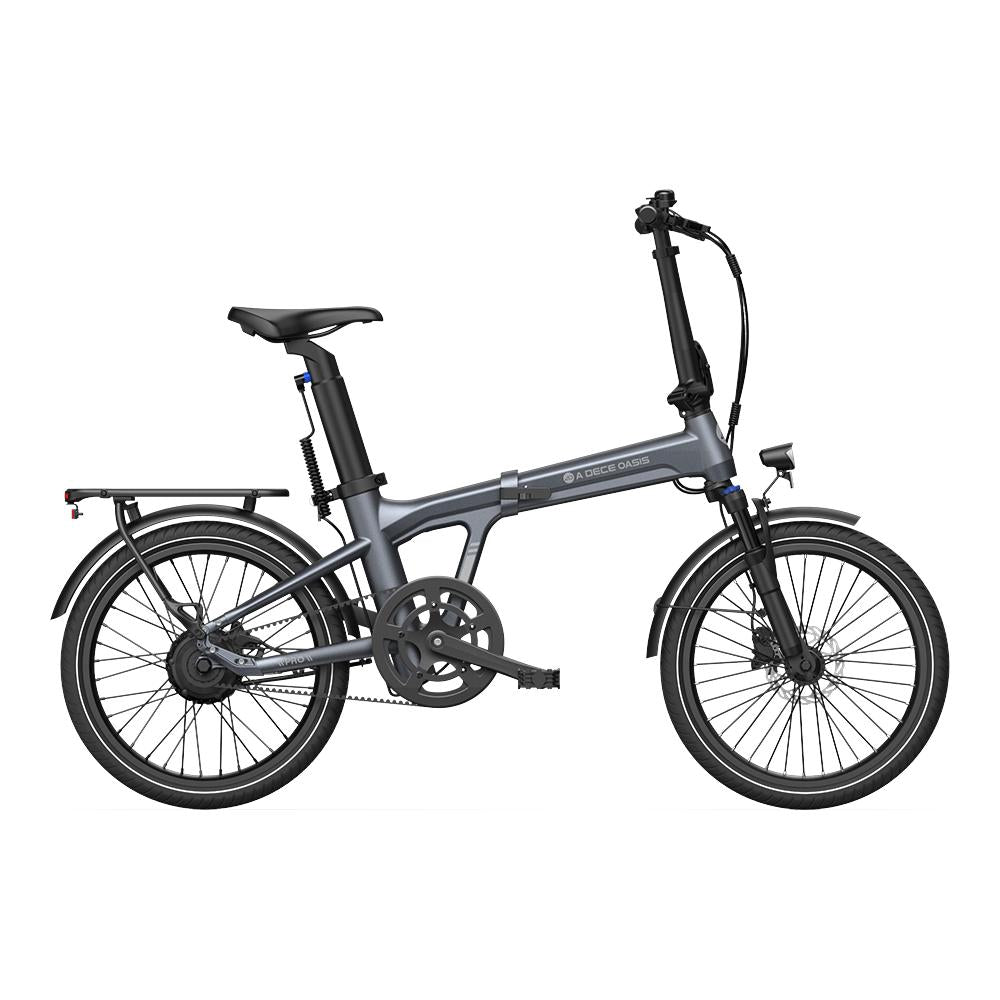
Automatic two-speed
ADO Air 20 Pro 2026
The more useful upgrade for riders facing varied terrain. ADO lists a Bafang automatic two-speed motor, dual-sided torque sensing, 50Nm, belt drive, hydraulic brakes and a lockout fork.
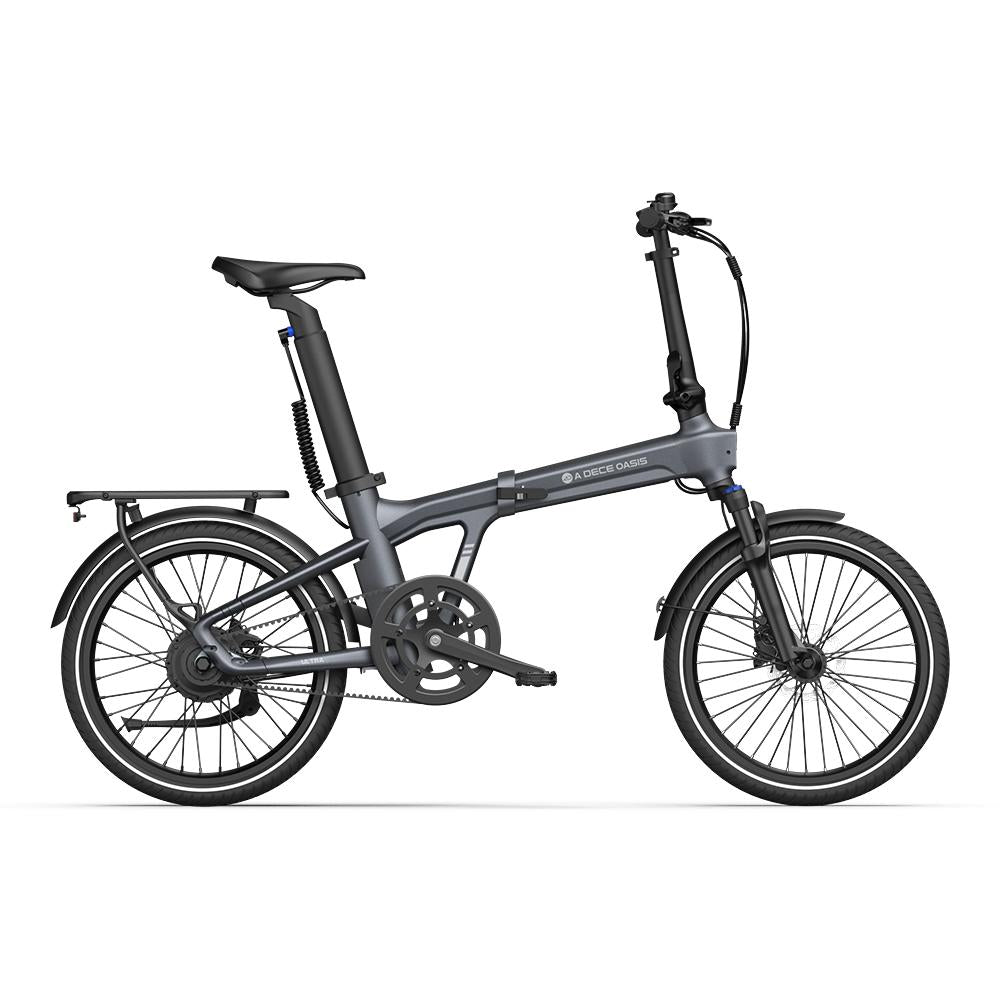
Automatic three-speed
ADO Air 20 Ultra 2026
The premium option adds the second-generation Bafang H730 three-speed hub, 50Nm, NFC start, integrated lighting and a more complete commuter package. It also weighs and costs more, because engineering rarely sends free gifts.
What the numbers do not show
Look at the fold, the riding position and the amount of bicycle left after folding.
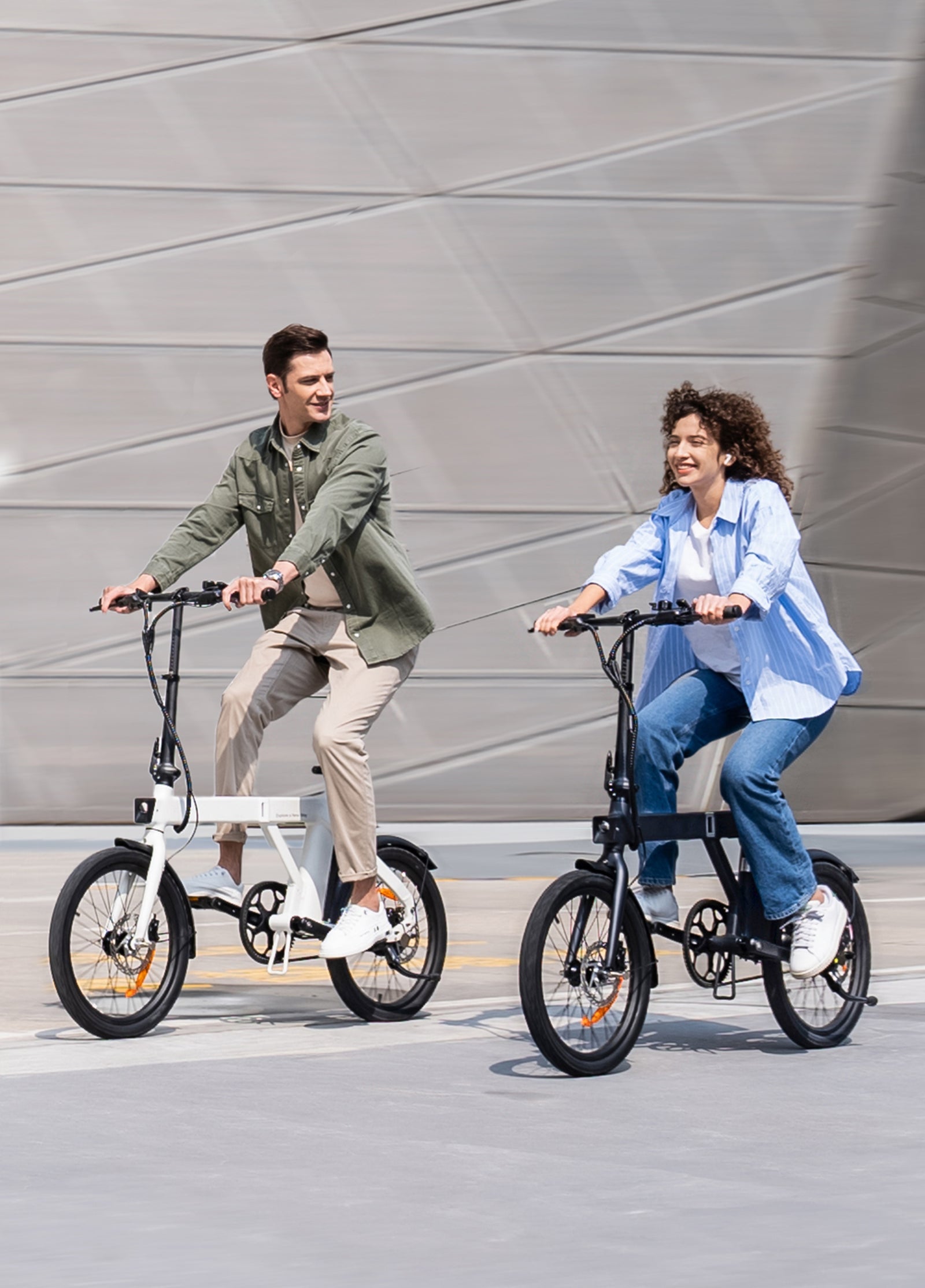
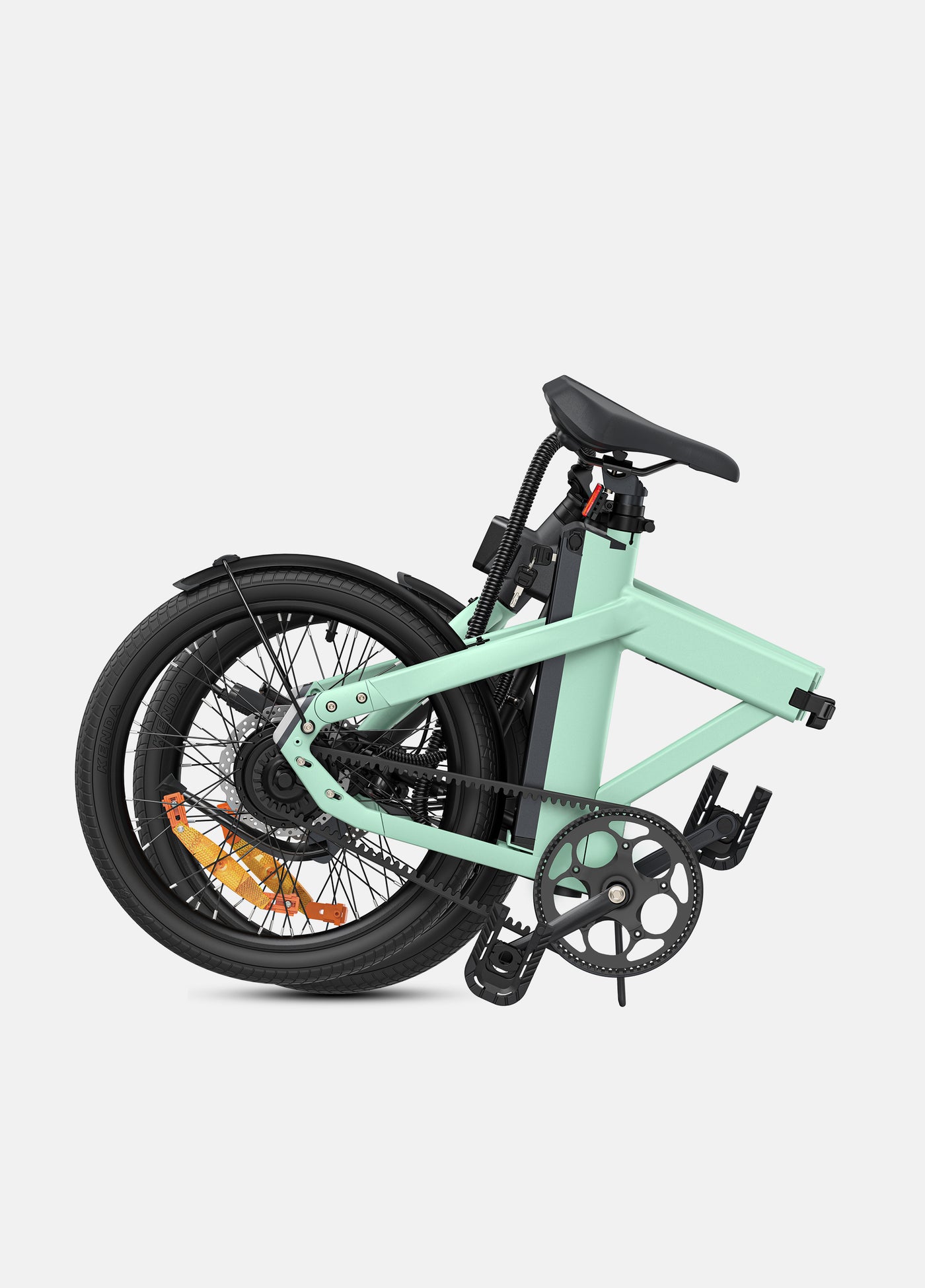
Street-use and regional reality
These are global commuter bikes, not automatically U.S.-labeled Class 1 e-bikes.
The 250W, pedal-assist, 25km/h configurations fit the familiar European-style pedelec formula. U.S. law is organized differently and often relies on Class 1, 2 or 3 labeling, assisted-speed limits and throttle behavior. A low motor number does not replace the need for the correct label and local route rules.
Confirm that the delivered configuration is the 250W, 25km/h pedal-assist version, then check national and local access rules. Neither comparison should be based on an unlocked or imported specification.
Confirm U.S. shipping, UL certification details, class labeling, maximum assisted speed, throttle status, warranty service and replacement-battery availability before ordering. The P20 is not a standard model on ENGWE’s U.S. storefront.
Who should buy which?
The final choice is mostly about value, polish and terrain.
Buy ADO Air 20S when…
You want the more polished ownership package.
- You lift the bike regularly and every half-kilogram matters.
- You value the color display and ADO app.
- You want a clearer path to Pro or Ultra versions later.
- The ADO regional store provides the better support arrangement.
Buy ENGWE P20 when…
You want the core formula for less.
- Your route is mostly flat and paved.
- You care more about price than app features.
- The published folded size suits your trunk or storage area.
- ENGWE confirms stock and support in your buying region.
Buy neither when…
Your commute is steep, rough or cargo-heavy.
- You face long or steep climbs every day.
- You want a throttle or U.S. Class 3 speed.
- You regularly carry a child, passenger or heavy delivery load.
- You need established local dealer service.
Watch before buying
Video exposes the hinge choreography that product photos politely skip.
ADO Air 20S
See the standard Air platform
Watch the folding process, belt drive, rider fit and whether its portability matches your building rather than an empty studio.
ENGWE P20
Judge the compact value option
Useful for seeing the rigid city setup, folded shape and real riding posture beyond ENGWE’s extremely clean white-background photography.
ADO Air 20 Pro
See what the upgrade buys
Compare the automatic gearing and added equipment before deciding whether the standard Air 20S is enough for your terrain.
FAQ
ENGWE P20 vs ADO Air 20 questions.
Which is better, the ENGWE P20 or ADO Air 20?
The current ADO Air 20S is the narrow overall winner for its slightly lower listed weight, app support and broader upgrade ecosystem. The ENGWE P20 is the better value choice when its lower price and regional availability work for you.
Why does the ADO Air 20 page now say Air 20S?
ADO’s original Air 20 product address currently redirects to the Air 20S listing. This comparison therefore treats the Air 20S as the current standard successor while separately covering the 2026 Pro and Ultra upgrades.
Which bike is lighter?
ADO lists the Air 20S at 18kg excluding accessories, while ENGWE lists the P20 at 18.5kg. The difference is only 0.5kg, so folded shape and where you can grip the frame may matter just as much.
Which one is better for hills?
Neither standard model is ideal for frequent steep climbs because both use a single-speed belt drivetrain and list 42Nm. The ADO Air 20 Pro and Ultra add automatic internal gearing and 50Nm, making them more sensible ADO options for varied terrain.
Do both bikes have a torque sensor and belt drive?
Yes. Both current listings specify torque-sensor pedal assistance and a carbon belt drive. That combination gives smoother assistance and less routine drivetrain maintenance than a basic cadence-sensor folder with a chain.
Can either bike really travel 100km?
Both manufacturers advertise up to 100km, but real range can be substantially lower depending on assistance level, hills, rider weight, temperature, wind and stops. Treat the figure as a best-case comparison claim rather than a guaranteed commute distance.
Are the ENGWE P20 and ADO Air 20 street legal in the United States?
Do not assume so from the 250W rating alone. Confirm the exact delivered version, U.S. class label, assisted speed, throttle behavior, certification, local laws and route access. The ENGWE P20 is primarily presented on ENGWE’s global and European storefronts rather than its normal U.S. lineup.
Which one folds smaller?
ENGWE publishes a folded size of 90 × 42 × 62cm for the P20. Independent measurements of the original ADO Air 20 platform are around 85 × 45 × 70cm. Neither wins every dimension, so measure the actual trunk, closet or stair turn that matters.
Deals without daily inbox cardio
Get notified when a folding e-bike deal is genuinely worth checking.
Occasional updates on ADO, ENGWE and other city-friendly folding e-bikes, plus useful legal and buyer-guide updates.
No spam. Unsubscribe anytime. Always verify current specifications, stock, pricing and regional rules before buying.
Final verdict
Buy the ADO for polish. Buy the P20 for value. Upgrade when the hills demand it.
The ADO Air 20S wins this comparison by a narrow margin, not a dramatic knockout. It is slightly lighter, more connected and supported by a clearer family of upgraded models. The ENGWE P20 remains the smarter bargain when you want the same basic belt-drive, torque-sensor commuting recipe and do not need ADO’s software or upgrade ecosystem.
For a flat city commute, either can be a clean, low-maintenance answer. For steep hills, passenger duty, heavy cargo or high-speed U.S. riding, this is the wrong argument between the wrong two bikes.
Product specifications and availability were reviewed in July 2026. Manufacturer pages can contain regional differences or conflicting details; confirm the exact configuration in writing before purchase. Claimed ranges are not guaranteed.
Official sources and useful references