Updated July 2026 · RideStreetLegal delivery guide
Food delivery by e-bike
How Much E-Bike Range Do You Need for DoorDash?
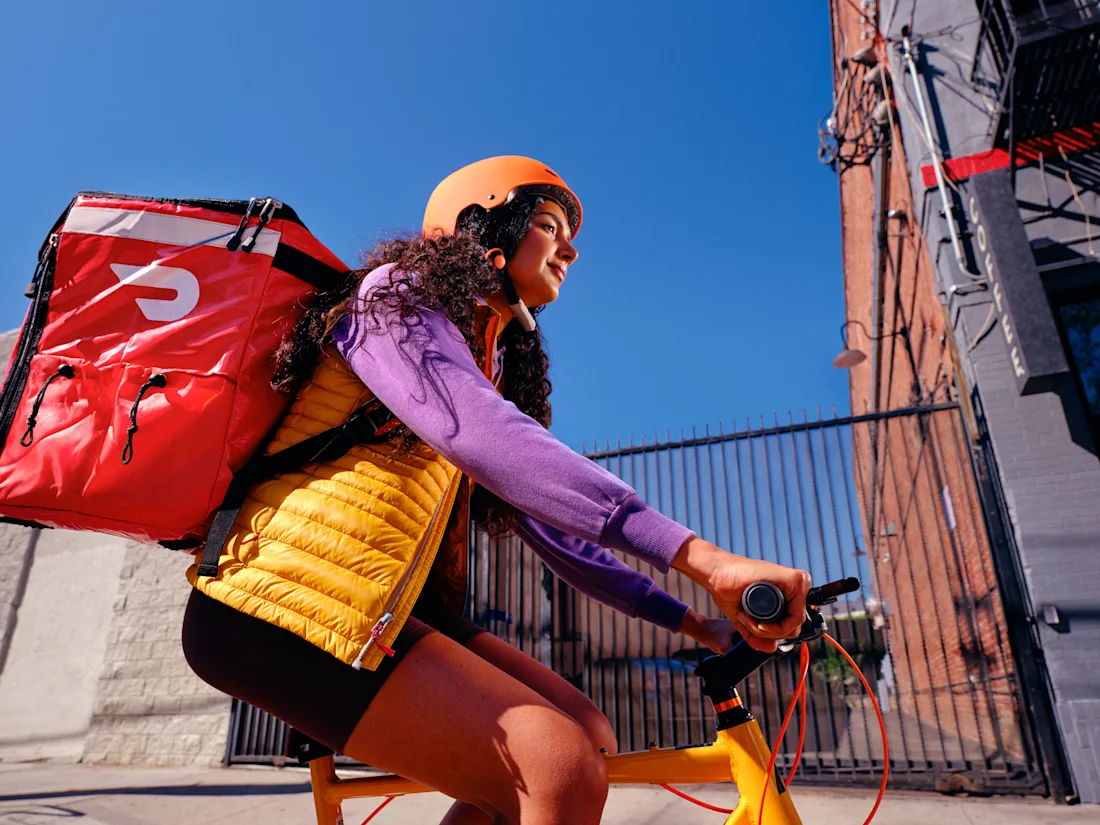
The advertised number on a product page is not the number I would plan a delivery shift around. Food delivery adds repeated stops, cargo, navigation detours, weather and the ride home — all of which make battery margin more important than a flashy maximum-range claim.
RideStreetLegal may earn from qualifying purchases through some links, at no extra cost to you. Recommendations are organized by delivery use case—not by commission.
Real-world delivery range
Why food delivery is harder on a battery than a casual weekend ride.
A normal range test is usually smoother than a delivery shift. Delivery riders accelerate from curbs, stop at restaurants, restart after every drop, carry a lock and food, check maps, circle buildings, climb hills and sometimes ride faster when an order is running late. Each small demand takes a bite out of the range figure printed on the sales page.
Repeated starts
Every pickup and drop restarts the bike
Acceleration is where a motor works hardest. Dense delivery work can mean dozens of full or partial restarts in one shift.
Cargo and body weight
The bike is carrying more than just you
Delivery bag, drinks, lock, rain layer, spare tools and groceries can add meaningful weight before a large order even arrives.
Reserve problem
The final miles are not optional
If the app takes you to the edge of the zone, the remaining battery still has to cover the ride home or to a safe charging location.
Interactive delivery range check
Estimate the battery size your DoorDash shift needs.
This tool uses a practical watt-hour-per-mile estimate rather than a best-case marketing figure. It is educational, not a guarantee. Temperature, wind, tire pressure, bike efficiency, battery age, hills and riding style can move the result.
Battery-size lanes
What different battery sizes usually mean for delivery work.
Under 400Wh
Short-shift and efficiency lane
Best for lighter bikes, flatter areas, shorter blocks and riders willing to pedal. It can work, but there is less room for bad weather, heavy throttle use or a long ride home.
500–650Wh
The practical beginner middle
This is where many new riders find a usable balance of price, weight and range. It still requires realistic expectations, but the buffer is much healthier.
700Wh and above
Longer-shift utility lane
More attractive for long blocks, hills, heavier bikes and riders who want less battery anxiety. The tradeoff is usually weight, price or both.
Delivery-ready range picks
Six different ways to solve the delivery-range problem.
Choose around the actual work: maximum battery margin, folding storage, lower weight or longtail cargo. Manufacturer range figures are best-case claims, so the calculator above deliberately plans more conservatively.

Best maximum range
LectricLectric XPedition 2.0
The work-first option when long shifts, cargo and battery margin matter more than low weight.
- Dual-battery version is marketed for up to 120 miles
- 450-lb total payload and 300-lb rear-rack rating
- Class 1/2/3 operation and UL 2849 certification

Best balanced utility
Ride1UpRide1Up Vorsa
A full-size utility platform for riders who want useful range and cargo capacity without moving to a dedicated longtail.
- 30–60 mile stated range
- 750W motor with 95Nm stated torque
- 440-lb payload and 150-lb rear-rack rating
Best folding capacity
VelotricVelotric Fold 1 Plus
A folding choice with unusually high carrying capacity for riders balancing delivery work, apartment storage and mixed transit.
- Up to 68 miles of stated pedal-assist range
- 450-lb maximum load and 120-lb rear rack
- UL 2849 system and UL 2271 battery certification

Best lightweight efficiency
Ride1UpRide1Up Roadster v3
A lighter city direction for dense zones where efficient pedaling, handling and indoor storage matter more than heavy cargo.
- 20–40 mile stated range
- 500W motor with torque-sensor response
- Rear-rack and add-on battery options

Best folding starter
LectricLectric XP4
A mainstream folding utility bike with a large accessory ecosystem and a long-range battery configuration.
- Long-range configuration is marketed for up to 85 miles
- Torque-sensor assist and hydraulic brakes
- Compatible with Lectric cargo and delivery accessories

Best longtail alternative
FiidoFiido T2
A high-capacity longtail direction for riders whose delivery plan includes larger orders, groceries or all-day utility use.
- Fiido catalog lists up to 85 miles of range
- 440-lb stated maximum capacity
- Longtail rack layout for cargo-focused use
International longtail comparison
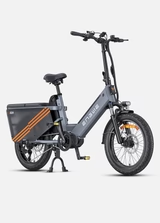
ENGWEENGWE LE20
A mid-drive cargo platform with single- and dual-battery configurations, but the currently indexed official listing is the European version.
- 250W mid-drive European configuration
- Single- and dual-battery choices
- Cargo, passenger and fast-charge package options
International city-cargo comparison
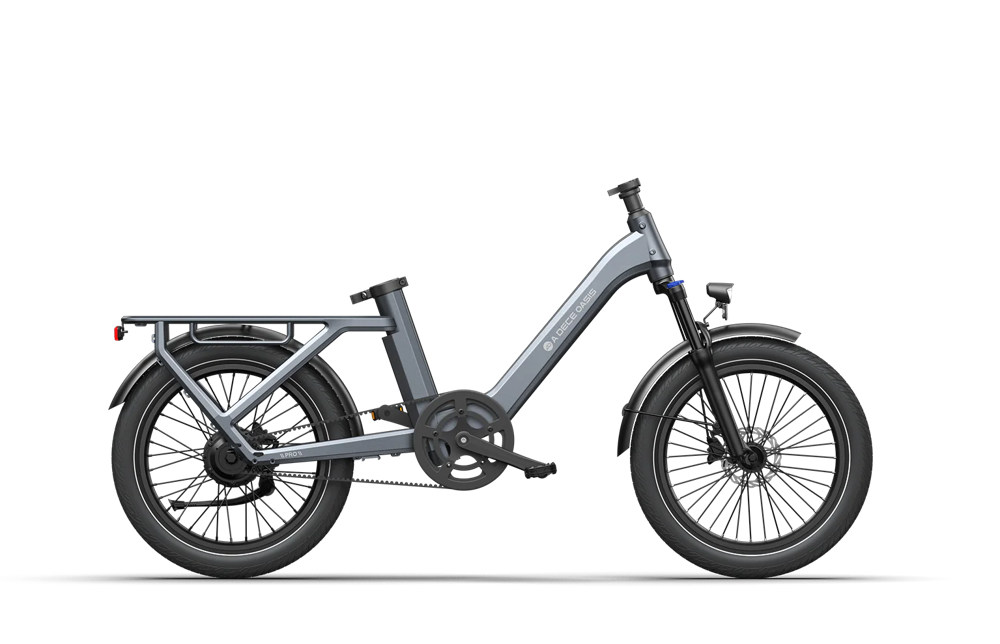
ADOADO Air One Pro
A compact family and city-cargo design with a belt drive, torque sensor, automatic two-speed Bafang system and modular rack mounts.
- 250W / 40Nm European-market motor specification
- Removable and expandable battery design
- 150kg permissible maximum weight
Premium U.S. dealer-supported cargo
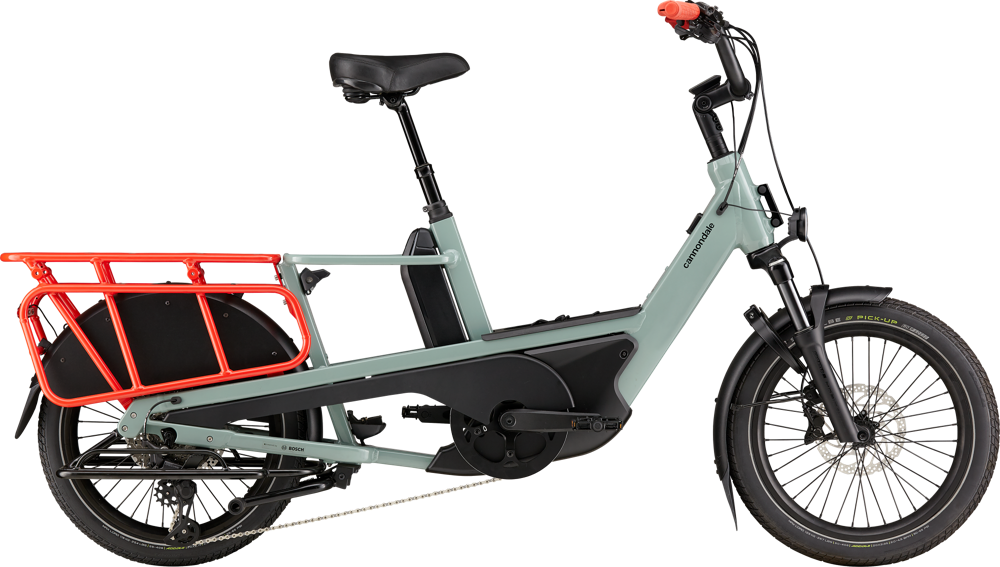
CannondaleCannondale Cargowagen Neo
A compact longtail built around Bosch support, local-bike-shop assembly and a dual-battery-ready frame rather than a headline maximum-range claim.
- Bosch Performance Speed assistance up to 28 mph
- 545Wh PowerPack with two battery mounts
- 200kg total capacity and 80kg integrated rear rack
Research check: advertised range vs delivery range
The biggest number on the product page is not the number to enter into your work schedule.
Manufacturer range claims are useful for comparing battery systems, but the test conditions are rarely the same as repeated restaurant stops, a loaded rack, higher assist, wind, cold weather and a ride home. For delivery planning, battery capacity and reserve matter more than a single maximum-mile headline.
| Model | Current official information | What matters for delivery | Availability check |
|---|---|---|---|
| Velotric Fold 1 Plus | 608Wh battery; up to 68 miles pedal assist and 45 miles throttle; 63-lb bike; 120-lb rear rack. | Useful storage and rack capacity, but the 63-lb folded weight can be difficult in walk-up apartments. | Current U.S. product page and tracked referral link. |
| Cannondale Cargowagen Neo | 545Wh Bosch battery; 28-mph Performance Speed motor; dual-battery-ready frame; 200kg total capacity. | The dealer network, second-battery option and 80kg integrated rack can matter more than a huge laboratory range claim. | U.S. dealer pickup and assembly; online stock can vary. |
| ADO Air One Pro | 250W / 40Nm European specification; automatic two-speed motor; removable/expandable battery; 150kg permissible weight. | A clean compact-cargo layout, but the live page is not presently a straightforward U.S.-spec purchase page. | Verify U.S. shipping, warranty and road configuration before buying. |
| ENGWE LE20 | Official page currently identifies the listing as an EU 250W mid-drive model with single/dual batteries and a best-case 350km headline. | Dual batteries and cargo packages are relevant, but do not convert the 350km marketing ceiling directly into paid-shift miles. | Verify the exact regional version; the indexed page says it does not ship European inventory to the U.S. |
The calculator above intentionally uses a conservative 13–31 Wh-per-mile planning range depending on terrain, assist, load and weather. It is not a laboratory test or a guarantee.
Range-saving habits
How to finish more shifts without riding like the battery is unlimited.
Use power where it saves time
Higher assist makes sense for hills, starts, merges and heavy loads. Between orders, lower assist can preserve meaningful range without making the shift painfully slow.
Keep the bike mechanically efficient
Correct tire pressure, non-dragging brakes and a maintained drivetrain are boring recommendations because they work. A neglected bike wastes battery every mile.
Watch watt-hours, not only percentage
A battery percentage is easier to understand when you also know the battery capacity. Fifty percent of a 750Wh pack is very different from fifty percent of a 360Wh pack.
Build a charging fallback
Know whether your battery is removable, whether the charger fits in your bag, and whether a legal and safe charge stop exists before you need it.
Watch before a delivery shift
Three short bike-handling videos that make the range advice easier to use.
DoorDash links riders to this bicycle-safety video series from its Bike Dashing resources. The first video is especially relevant to battery use: smoother starts, earlier shifting and fewer panic accelerations reduce wasted energy while making a loaded bike easier to control.
Battery-friendly control
Starting, Stopping, and Shifting
Use the right gear before restarting, pedal smoothly and avoid asking the motor to rescue every stop from the hardest gear.
City delivery skills
Signaling and Scanning
Predictable lane changes and earlier decisions help you avoid last-second braking, detours and high-power restarts.
Safer route choices
Traffic Safety
The shortest route is not always the best delivery route. A calmer parallel street can save braking, stress and battery.
These videos are the exact YouTube resources linked from DoorDash’s current Bike Dashing safety page.
Delivery-bike updates
Get new delivery guides, bike picks and law updates.
RideStreetLegal sends practical updates when delivery-bike guides, model comparisons, useful deals and state-law pages are added or materially updated.
Send me the useful updates.
No spam. Unsubscribe anytime. Product specifications, app programs and local rules can change.
FAQ
DoorDash e-bike range questions.
How much e-bike range do I need for DoorDash?
Many first-time riders are better served by roughly 30 to 50 miles of realistic usable range, but dense short shifts can need less and longer or hillier shifts can need more.
Is 20 miles of e-bike range enough for DoorDash?
It may be enough for a short dense shift, but it leaves little room for the trip home, detours, cold weather, hills or battery aging.
Does throttle use reduce DoorDash range?
Usually yes. Heavy throttle use, high assist, repeated acceleration and higher speeds generally consume more energy than steady pedal-assist riding.
Should delivery riders buy a second battery?
A second battery can be valuable for regular long shifts, but beginners may be better off testing a few shifts before buying one.
Which e-bike is best for delivery range?
The best choice depends on storage, cargo and terrain. A lighter bike can be efficient in dense cities, while a utility bike with a larger battery can fit longer or heavier shifts.
Official and product references
Sources reviewed for this guide.
- DoorDash — How Bike Dashing Works
- DoorDash — Current Dasher Requirements
- Lectric XPedition 2.0 official page
- Ride1Up Vorsa official page
- Ride1Up Roadster v3 official page
- Velotric Fold 1 Plus official page
- Fiido T2 official page
- FDNY Smart — E-Bike Battery Safety
- ENGWE LE20 official product page (EU listing)
- ADO Air One Pro official product page
- Cannondale Cargowagen Neo official product page
- DoorDash-linked Traffic Safety video
- DoorDash-linked Signaling & Scanning video
- DoorDash-linked Starting, Stopping & Shifting video